Impact Factor ISSN: 1449-1907




Int J Med Sci 2026; 23(12):3585-3605. doi:10.7150/ijms.138103 This issue Cite
Review
Non-Biological Liver Support Systems for Hepatic Encephalopathy: A Framework for Phenotype-Matched Precision Management
Minghang Xie1,#, Ye Zhen2,#, Zhongyuan Yang3, 
1. Tongji Hospital, Tongji Medical College, Huazhong University of Science and Technology, Wuhan, Hubei, China.
2. ShangRao GuangXin District People's Hospital, No. 38, Wenwei Lane, Weiyi Road, Xuri Sub-district, Guangxin District, Shangrao 334100, China.
3. Department of Infectious Diseases, Tongji Hospital, Tongji Medical College and State Key Laboratory for Diagnosis and Treatment of Severe Zoonotic Infectious Diseases, Huazhong University of Science and Technology, 1095 Jiefang Avenue, Wuhan 430030, China.
# Minghang Xie and Ye Zhen contributed equally to this work and share first authorship.
Received 2026-5-21; Accepted 2026-9-11; Published 2026-10-9
Abstract
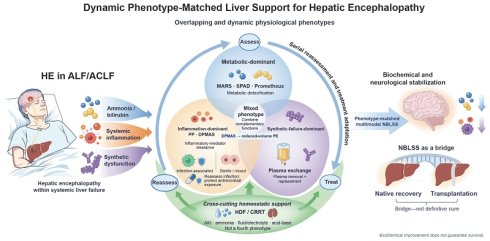
Hepatic encephalopathy (HE) is a severe neurological syndrome arising from the interaction between hyperammonemia and systemic inflammation. In ALF and ACLF, severe HE occurs within a broader context of systemic derangements, including inflammation and hepatic synthetic dysfunction. Despite advances in non-biological liver support systems (NBLSS), improved biochemical clearance has not consistently translated into a survival benefit. This review organizes their therapeutic effects into three principal and overlapping functional domains: metabolic detoxification, inflammatory-mediator clearance, and plasma removal/replacement. Individual modalities may contribute to more than one domain, although their dominant therapeutic functions differ. We observe a clinical transition from monotherapy toward hybrid protocols. Specifically, sequential adsorption and reduced-volume plasma exchange exemplify how complementary clearance and replacement functions can be combined while conserving donor plasma resources. Given the heterogeneity of clinical outcomes, a precision-management approach may better align extracorporeal support with individual physiological requirements. We propose using clinical and biomarker-based indicators to identify metabolic-dominant, inflammation-dominant, and synthetic-failure-dominant physiological phenotypes. These phenotypes are conceptualized as overlapping and dynamically evolving physiological patterns rather than mutually exclusive biological subtypes. Cross-cutting homeostatic requirements should be assessed in parallel when selecting and adapting extracorporeal support. Dynamic phenotype-matched multimodal support may better translate biochemical and neurological improvement into clinically meaningful stabilization while providing a bridge to native liver recovery or transplantation.
Keywords: hepatic encephalopathy, acute liver failure, acute-on-chronic liver failure, non-biological liver support systems, phenotype-matched management
1. Introduction
Hepatic encephalopathy (HE) is a severe complication of liver failure characterized by profound neurological and metabolic dysfunction [1]. Although hyperammonemia was historically considered the primary cause, current evidence indicates that HE results from the combined effects of neurotoxins and systemic inflammation, which compromise blood-brain barrier (BBB) permeability [2]. Therefore, severe HE should not be considered an isolated neurological symptom, but rather the neurological manifestation of systemic dysfunction induced by ALF and ACLF [3,4,5]. Consequently, extracorporeal interventions may need to address these underlying systemic abnormalities to achieve meaningful neurological stabilization. Standard medical therapies, including nonabsorbable disaccharides and rifaximin, primarily reduce gut-derived ammonia but do not directly address the broader systemic inflammation characteristic of ACLF [3,5,6]. Accordingly, in selected patients, extracorporeal support may serve as a bridge to native liver recovery or transplantation [6].
Non-biological liver support systems (NBLSS) were developed to fulfill this clinical need. Traditionally, these technologies are categorized by their physical separation principles, ranging from diffusive dialysis to bulk plasma separation [7]. However, this mechanism-based classification does not reflect the physiological heterogeneity of liver failure. To address this limitation, we organize the therapeutic effects of NBLSS into three principal and overlapping functional domains rather than mutually exclusive device categories: metabolic detoxification, inflammatory-mediator clearance, and plasma removal/replacement. Albumin-dialysis systems such as the molecular adsorbent recirculating system (MARS) predominantly facilitate the removal of albumin-bound toxins while also clearing water-soluble solutes through their coupled dialysis components. Adsorption-based systems such as the double plasma molecular adsorption system (DPMAS) remove bilirubin together with a range of circulating inflammatory mediators. Plasma exchange (PE), in contrast, combines broad removal of circulating plasma constituents with replacement using donor plasma. Importantly, assignment of a modality to a particular functional domain reflects its dominant therapeutic role rather than an exclusive mechanism of action.
Despite technical advances, monotherapy may be insufficient to address the multiple concurrent physiological abnormalities of severe liver failure. No currently available NBLSS reproduces the endogenous biosynthetic function of hepatocytes. Dialytic and adsorptive modalities primarily provide subtractive extracorporeal support, whereas PE combines plasma removal with exogenous replacement of circulating plasma constituents when fresh frozen plasma is used as the replacement fluid [8,9,10]. This replacement can temporarily compensate for selected consequences of hepatic synthetic failure but should not be interpreted as restoration of hepatic synthesis. High-volume plasma exchange is additionally limited by resource availability and the risk of citrate toxicity [11]. These limitations have driven increasing interest in hybrid protocols, such as sequential DPMAS and reduced-volume plasma exchange [12,13,14]. Such strategies combine complementary clearance and replacement functions according to evolving physiological requirements and may reduce donor-plasma use in resource-constrained settings [15]. In parallel, disturbances of renal function, fluid balance, electrolytes, and acid-base homeostasis may coexist with any dominant phenotype and may require adjunctive renal replacement therapy or hemodiafiltration [3,4,5,6]. These homeostatic abnormalities are therefore considered cross-cutting support requirements rather than a separate liver-failure phenotype.
However, biochemical and physiological improvements achieved with NBLSS do not consistently translate into survival benefits, resulting in a recognized "biochemistry-survival disconnect"[12,13,16,17]. This discrepancy may partly reflect the biological heterogeneity of ALF and ACLF and a mismatch between the dominant physiological abnormalities of individual patients and the principal functions provided by a given extracorporeal strategy. However, irreversible liver injury, established multiorgan failure, treatment timing and intensity, transplantation-related factors, and procedure-associated adverse effects may also contribute. These limitations support a re-evaluation of NBLSS beyond hardware-based descriptions toward a framework centered on clinical physiology. We aim to (1) organize NBLSS according to their dominant and overlapping therapeutic functional domains; (2) analyze the clinical transition from monotherapy toward complementary and hybrid extracorporeal strategies; and (3) propose a phenotype-matched precision-management framework in which dominant physiological phenotypes, coexisting abnormalities, and cross-cutting homeostatic requirements guide the dynamic selection and combination of therapeutic modalities.
2. Methods
For this narrative review, PubMed, Embase, and the Web of Science Core Collection were searched from database inception through early 2026. The search strategy utilized keywords and MeSH terms related to non-biological liver support systems (NBLSS) and hepatic encephalopathy (HE), including "artificial liver support system," "MARS," "plasma exchange," and "DPMAS," combined with "acute liver failure" or "ACLF." To ensure comprehensive coverage, the reference lists of key articles were also manually screened.
Given the narrative design, formal systematic-review eligibility criteria and quality-assessment procedures were not applied; studies were selected primarily for their clinical relevance to the scope of this review. We focused on clinical trials, observational studies, and high-quality case series that evaluated the technical mechanisms and therapeutic efficacy of NBLSS. Priority was given to studies reporting on neurological recovery, the clearance of neurotoxins (e.g., ammonia and bilirubin), and transplant-free survival. Studies exclusively focused on bioartificial livers or isolated preclinical models were excluded to maintain a strong clinical focus. The selected evidence was then synthesized narratively to provide a practical overview of current modalities and emerging therapies. Because most clinical studies evaluate complete extracorporeal modalities or multimodal protocols rather than isolated physiological mechanisms, the synthesis did not attempt to quantify the independent causal contribution of individual functional domains. Instead, modalities were organized according to their dominant therapeutic effects while overlapping functions were explicitly considered.
3. The Pathophysiological Mechanisms of HE
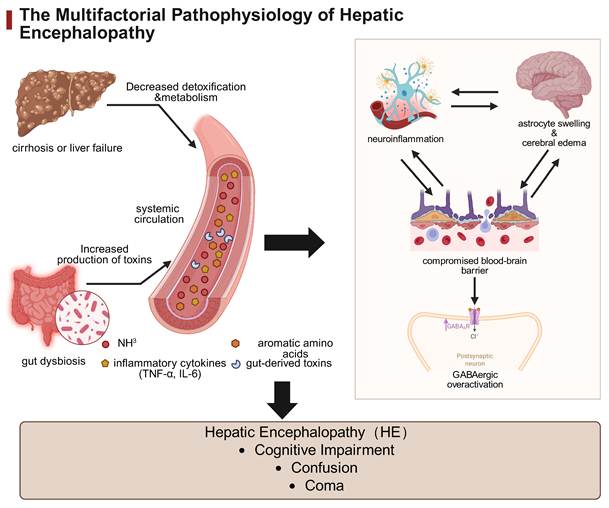
Hepatic encephalopathy (HE) is a severe neuropsychiatric complication of liver failure, characterized by cognitive and motor abnormalities and a poor prognosis [18]. Its pathophysiology involves multiple interacting mechanisms, including hyperammonemia, systemic and neuroinflammation, metabolic and bioenergetic dysfunction, and neurotransmitter dysregulation [17,19] (Fig. 1). These mechanisms interact extensively, and their relative contributions may differ among patients and change during the course of ALF or ACLF.
The Multifactorial Pathophysiology of Hepatic Encephalopathy.
3.1. Ammonia Toxicity
Ammonia toxicity remains a central mechanism of HE pathogenesis. As hepatic clearance declines, systemic ammonia accumulates, exerting neurotoxic effects and correlating with disease severity and prognosis [20,21,22]. At the cellular level, ammonia impairs both astrocyte and microglial function. In bile duct ligation (BDL) models, ammonia exposure upregulates inflammatory and hypoxic pathways, contributing directly to cerebral injury [23]. Specifically, ammonia inhibits autophagic flux in astrocytes, which reduces their stress response capacity and promotes cytotoxic edema [24]. It also induces neutrophil dysfunction, leading to the release of reactive oxygen species (ROS) [25]. This oxidative stress impairs cerebral hemodynamics and oxygen metabolism; the severity of these perfusion deficits correlates directly with arterial ammonia concentrations [26,27,28]. Although hyperammonemia commonly coexists with inflammatory and other systemic abnormalities, metabolic and neurotoxic accumulation may predominate in some patients, defining what we operationally term a metabolic-dominant phenotype.
3.2. Infection and Inflammation
Systemic inflammation is a major pathogenic amplifier of HE and may arise from infection or sterile inflammation associated with extensive hepatic necrosis. These processes may coexist in ALF or ACLF and produce overlapping findings, including fever or hypothermia, leukocyte abnormalities, organ dysfunction, and elevated inflammatory biomarkers. Consequently, neither a single biomarker nor an isolated negative culture can reliably determine the inflammatory origin, and serial clinical, microbiological, and physiological assessment is required. Importantly, inflammation can worsen neurological dysfunction beyond the effect of hyperammonemia alone [2,29]. In ALF, early encephalopathy coincides with microglial activation and significant upregulation of proinflammatory cytokines [30]. Systemic inflammation further compromises the BBB, increasing permeability to neurotoxins—a process particularly evident in acetaminophen-induced ALF [31,32,33]. These inflammatory and oxidative processes may impair neuronal function, neurotransmission, and cerebral metabolic homeostasis. In some patients, the inflammatory burden and associated BBB dysfunction may predominate over metabolic toxin accumulation, constituting an inflammation-dominant phenotype. This designation describes the dominant physiological burden rather than its infectious etiology and does not imply that inflammatory and metabolic mechanisms are independent, as substantial cross-talk between hyperammonemia and inflammation is central to HE pathogenesis [34,35,36].
3.3. Neurotransmitter Dysregulation
HE involves the overactivation of the inhibitory GABAergic system. Gut-derived GABA bypasses hepatic clearance, crosses the compromised BBB, and binds to postsynaptic receptors, increasing central inhibition [37]. Clinically, HE presentation resembles benzodiazepine-induced encephalopathy [38,39]. This is supported by findings of elevated endogenous benzodiazepine-like ligands in the cerebrospinal fluid and an increased density of peripheral-type benzodiazepine receptors on astrocytes, which together increase GABAergic tone and induce coma [40,41].
3.4. Metabolic and Bioenergetic Dysfunction
HE is associated with the dysregulation of central energy pathways, specifically the tricarboxylic acid (TCA) cycle [42]. Patients experience altered energy production and amino acid homeostasis. Cerebral lactate accumulation increases osmotic stress and may aggravate cerebral edema and intracranial hypertension, major contributors to poor outcomes in severe ALF [43]. Concurrently, liver failure alters the ratio of branched-chain to aromatic amino acids (BCAA/AAA). Due to impaired hepatic metabolism, AAAs accumulate and cross the BBB, acting as precursors for false neurotransmitters that disrupt physiological signaling and accelerate encephalopathy [44].
3.5. Gut Microbiota Disruption
HE pathogenesis is closely linked to gut-liver-brain axis dysbiosis. Loss of commensal microbial diversity and expansion of potentially pathogenic taxa, including Enterobacteriaceae and Streptococcaceae, may promote systemic inflammation and cognitive dysfunction [45]. Gut-derived neuroactive metabolites may also accumulate when hepatic clearance is impaired; for example, phenylethylamine produced by Ruminococcus gnavus has been implicated in direct neurotoxicity [46]. Microbiota-directed interventions may improve selected clinical outcomes. For example, probiotics have been evaluated for the prevention of HE after TIPS [47], whereas rifaximin is recommended for the prevention of recurrent overt HE [6]. Nevertheless, persistent gut-derived metabolic and inflammatory signals may continue to contribute to the systemic neurotoxic milieu. Thus, gut-liver-brain dysregulation represents an additional contributor to the interacting metabolic and inflammatory mechanisms underlying HE.
3.6. Therapeutic Implications: From HE Pathophysiology to Extracorporeal Support Requirements
The multifactorial pathogenesis of HE precludes a simple one-mechanism-one-device approach. Hyperammonemia and systemic inflammation directly contribute to neurological dysfunction, whereas severe ALF or ACLF also involves hepatic synthetic failure and disturbances of renal function, fluid balance, electrolytes, and acid-base homeostasis that influence the requirements and tolerance of extracorporeal support. Hepatic synthetic failure is therefore considered here as a systemic liver-failure deficit that modifies support requirements rather than as a direct HE mechanism equivalent to hyperammonemia or neuroinflammation [1,3,6,14,15].
Accordingly, phenotype matching should identify the dominant physiological pattern at a given time rather than assign patients to fixed or mutually exclusive categories. Clinically important coexisting abnormalities should then determine which extracorporeal functions are prioritized or combined. The following section therefore evaluates NBLSS according to their principal but overlapping functional domains, providing the basis for dynamic matching between evolving patient physiology and extracorporeal support.
4. Functional Domains and Pathophysiological Rationale of NBLSS
4.1. Principal and Overlapping Functional Domains of NBLSS
NBLSSs provide temporary extracorporeal support for patients with severe liver failure, particularly when transplantation is not immediately available or when native liver recovery remains possible [8,9,32,48]. Their principal clinical role is therefore to provide a bridge to transplantation or a physiological window for native liver regeneration [12].
Traditionally, NBLSSs are classified according to engineering principles such as dialysis, filtration, and adsorption. Although this approach describes how a device operates, it does not directly indicate which therapeutic functions are most relevant to a patient's physiological abnormalities. To address this limitation, we propose a framework based on three principal and overlapping therapeutic domains: metabolic detoxification, inflammatory-mediator clearance, and plasma removal/replacement. Metabolic detoxification refers to the removal of accumulated water-soluble and albumin-bound metabolites and neurotoxins and is a dominant function of albumin-dialysis systems such as MARS and SPAD [49]. Inflammatory-mediator clearance refers to extracorporeal removal of circulating inflammatory mediators together with other adsorbable substances, including bilirubin, and is a dominant function of plasma perfusion and DPMAS [14]. Plasma removal/replacement is exemplified by PE, which removes circulating plasma constituents while introducing replacement fluid; when fresh frozen plasma is used, this also provides exogenous coagulation factors and other plasma components without reproducing endogenous hepatic biosynthesis [16]. These domains are deliberately non-exclusive: individual modalities may span more than one domain while retaining a dominant therapeutic function. For example, MARS clears both albumin-bound and water-soluble solutes, DPMAS removes bilirubin together with inflammatory mediators, and PE combines broad plasma removal with replacement of circulating plasma constituents [8].
Because clinical studies generally evaluate complete extracorporeal interventions rather than isolated functional components, these domains should not be regarded as mechanistically independent, and their individual contributions to neurological recovery or survival cannot currently be reliably disentangled. The purpose of this framework is therefore not to assign each modality to a fixed category, but to identify the therapeutic functions most relevant to the patient's dominant physiological phenotype.
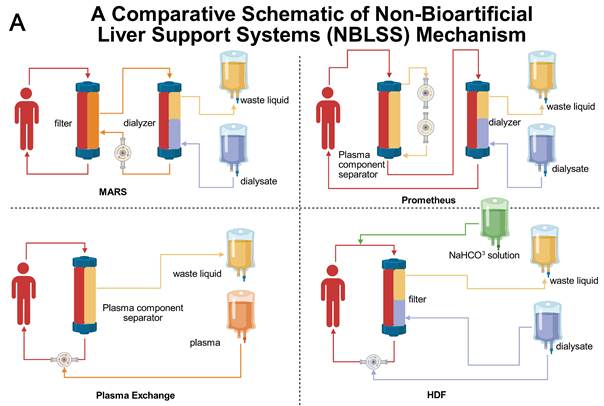
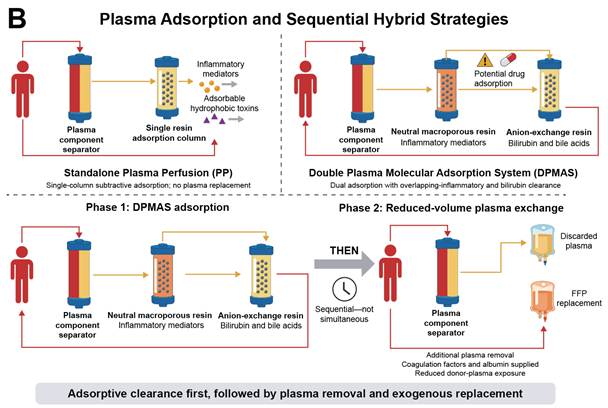
As summarized in Table 1 and Figures 2A and 2B, NBLSS modalities differ in their dominant therapeutic functions while retaining clinically relevant overlapping and cross-cutting effects. Depending on the technical characteristics of the modality, extracorporeal support can modify different components of the circulating metabolic and inflammatory milieu, including ammonia, albumin-bound toxins, bile acids, aromatic amino acids, and inflammatory mediators. No single modality uniformly addresses all of these abnormalities. Rather, reduction of selected components of the systemic neurotoxic burden may contribute to neurological stabilization by attenuating processes associated with BBB dysfunction, astrocyte swelling, and neurological deterioration [12,49,50]. This incomplete but complementary activity provides a rationale for combining modalities with different dominant functions.
Functional Architecture of Non-Biological Liver Support Systems: Dominant, Overlapping, and Cross-Cutting Roles
| Modality / strategy | Technical principle / principal targets | Principal overlapping NBLSS functional domains | Cross-cutting dimension:homeostatic contribution | Key limitations / resource considerations | Key refs | ||
|---|---|---|---|---|---|---|---|
| Metabolic detoxification | Inflammatory-mediator clearance | Plasma removal / replacement | |||||
| A. Principal NBLSS modalities | |||||||
| MARS | Recirculating albumin dialysis with adsorber regeneration plus coupled high-flux dialysis. | Dominant — albumin-bound toxins and water-soluble solutes, including ammonia. | Limited — selected effects may occur, but broad mediator clearance is not a principal function. | None — no donor-plasma replacement; no restoration of hepatic synthesis. | Limited — small-solute clearance via the dialysis component; not dedicated renal/fluid support. | Dedicated/complex circuit; albumin/equipment requirements; platelet/coagulation effects and circuit clotting. | [8,10,54-56] |
| SPAD | Single-pass albumin dialysis using fresh albumin dialysate, usually on a CRRT platform. | Dominant — albumin-bound and water-soluble solute clearance. | Limited — no dedicated adsorption columns for broad mediator clearance. | None — no plasma-component replacement or hepatic synthetic function. | Adjunctive — CRRT platform can provide fluid, electrolyte and acid-base control. | Albumin consumption; sodium/citrate-related metabolic disturbances; circuit clotting. | [64,65,68,71] |
| Prometheus (FPSA) | Fractionated plasma separation/adsorption plus high-flux dialysis; targets albumin-bound and water-soluble solutes. | Dominant — efficient bilirubin/bile-acid and other toxin clearance. | Overlapping — selected mediator clearance, but incomplete and not dominant. | None — no donor-plasma replacement or restoration of biosynthesis. | Limited — dialysis component clears water-soluble solutes but is not dedicated homeostatic support. | Plasma-adsorber contact; thrombocytopenia/contact activation; possible hemodynamic intolerance. | [73,75,76,80,81] |
| Plasma perfusion (PP) | Plasma adsorption using macroporous resin and/or ion-exchange columns; targets hydrophobic toxins and selected mediators. | Overlapping — bilirubin, bile acids and other adsorbable compounds. | Dominant — selected circulating inflammatory mediators and adsorbable inflammatory components. | None — subtractive therapy; no coagulation-factor or albumin replacement. | None — requires adjunctive CRRT/HDF when homeostatic support is needed. | Adsorption saturation; nonselective removal of antimicrobials and other drugs; possible platelet/coagulation effects; drug-timing review and TDM where available. | [106,107,110-113] |
| DPMAS | Sequential dual-resin plasma adsorption targeting inflammatory mediators, bilirubin and bile acids. | Overlapping — substantial bilirubin/bile-acid removal; limited direct ammonia clearance. | Dominant — selected inflammatory-mediator clearance. | None — no replacement of coagulation factors or other deficient plasma components. | None — parallel CRRT/HDF is required when homeostatic abnormalities are clinically important. | Adsorption saturation; platelet consumption; nonselective adsorption of antimicrobials and other drugs; limited ammonia clearance; drug-timing review and TDM where available. | [13,14,108-112,115-118] |
| PE (selective, standard-volume, or HVPE) | Removal of patient plasma followed by replacement fluid; FFP couples broad plasma removal with exogenous component replacement. | Overlapping — removes protein-bound toxins and other circulating plasma solutes. | Overlapping — broad removal can reduce circulating inflammatory mediators. | Dominant — FFP supplies exogenous plasma constituents; compensates for selected consequences of synthetic failure without restoring hepatic biosynthesis. | None — no dedicated homeostatic role; large-volume therapy may increase fluid/citrate/electrolyte management needs. | High donor-plasma requirement, especially HVPE; citrate-related disturbances; TRALI/allergic reactions; hemodynamic stress. | [12,70,84,87-89,93] |
| B. Cross-cutting and representative multimodal support | |||||||
| CHDF / HDF | Continuous diffusive and convective clearance of water-soluble solutes with simultaneous fluid management. | Adjunctive — ammonia and other small-solute clearance. | Limited / not principal. | None — no donor-plasma replacement or hepatic synthetic function. | Dominant cross-cutting role — renal support plus fluid, electrolyte and acid-base control across any phenotype. | Limited protein-bound toxin clearance without an albumin/plasma component; circuit/anticoagulation issues; possible nutrient losses. | [51-53,95,100,104,105] |
| Sequential DPMAS → reduced-volume PE | Adsorption first reduces inflammatory mediators and bilirubin; subsequent reduced-volume PE adds removal plus donor-plasma replacement. | Overlapping — bilirubin/toxin removal during adsorption, with additional plasma-solute removal during PE. | Dominant component — adsorption-based inflammatory-mediator clearance. | Dominant component — reduced-volume FFP provides exogenous plasma constituents after adsorption. | None intrinsically — add CRRT/HDF according to renal, fluid, electrolyte or acid-base requirements. | Requires appropriate sequencing and reassessment; concurrent operation may adsorb newly infused plasma proteins; equivalence to full-dose HVPE is unproven. | [13,15,109,113,114,118,119] |
Notes: The three columns under “Principal overlapping NBLSS functional domains” correspond to the three functional domains defined in the review. “Dominant” denotes the principal therapeutic role and does not imply mechanistic exclusivity; “Overlapping,” “Adjunctive,” “Limited,” and “None” denote progressively less central contributions within the proposed framework. Current studies generally evaluate complete modalities or multimodal protocols, so the independent causal contribution of individual functional domains cannot be reliably disentangled. No currently available NBLSS restores endogenous hepatic biosynthesis. CHDF/HDF is shown as a cross-cutting homeostatic adjunct rather than a fourth NBLSS functional domain, and sequential DPMAS followed by reduced-volume PE is included as a representative hybrid strategy rather than a separate mechanistic domain.
Abbreviations: CHDF, continuous hemodiafiltration; CRRT, continuous renal replacement therapy; DPMAS, double plasma molecular adsorption system; FFP, fresh frozen plasma; FPSA, fractionated plasma separation and adsorption; HDF, hemodiafiltration; HVPE, high-volume plasma exchange; MARS, molecular adsorbent recirculating system; NBLSS, non-biological liver support systems; PE, plasma exchange; PP, plasma perfusion; SPAD, single-pass albumin dialysis; TDM, therapeutic drug monitoring; TRALI, transfusion-related acute lung injury.
A. A Comparative Schematic of Non-Bioartificial Liver Support Systems (NBLSS) Mechanism. B. Plasma Adsorption and Sequential Hybrid Strategies.
4.2. Homeostatic Support as a Cross-Cutting Dimension
Maintenance of the internal milieu is best considered a cross-cutting dimension of extracorporeal management rather than a fourth phenotype. Renal dysfunction, fluid overload, electrolyte abnormalities, and acid-base instability may accompany any of the three dominant physiological phenotypes. These abnormalities are therefore considered cross-cutting homeostatic modifiers that influence both treatment selection and tolerance. Continuous renal replacement therapy or hemodiafiltration may be incorporated as adjunctive support when such disturbances are clinically significant and may additionally facilitate ammonia clearance when severe hyperammonemia coexists. Thus, homeostatic support operates across the three principal functional domains and may modify the composition of multimodal therapy [4,51,52,53].
4.3. From Dominant Physiological Phenotypes to Dynamic Multimodal Support
Although NBLSS modalities have overlapping effects, their dominant functions, technical characteristics, safety profiles, and resource requirements remain clinically distinct. Bedside selection should therefore integrate patient physiology with modality-specific capabilities rather than rely primarily on engineering classification or device availability.
Under the proposed framework, the clinical decision pathway begins by identifying the dominant physiological phenotype using integrated clinical and laboratory information rather than assigning the patient to a fixed device category. A metabolic-dominant phenotype is characterized by predominant accumulation of metabolic and neurotoxic substances; an inflammation-dominant phenotype by a clinically important systemic inflammatory burden; and a synthetic-failure-dominant phenotype by severe hepatic synthetic dysfunction, particularly clinically significant coagulopathy. These phenotypes are operational constructs for clinical prioritization and may overlap, coexist as mixed patterns, and evolve over time. The dominant phenotype therefore identifies the principal therapeutic requirement rather than dictating a single device, while coexisting physiological deficits may justify additional complementary modalities. Homeostatic disturbances should be assessed and managed in parallel.
The following section evaluates individual NBLSS modalities by integrating their technical mechanisms, dominant and overlapping functions, clinical evidence, and major limitations [16]. Within this framework, phenotype matching is a dynamic process of prioritizing and adapting extracorporeal support according to evolving physiology rather than a fixed one-phenotype-one-device algorithm.
5. Technical Mechanisms and Clinical Application of NBLSS Modalities
Table 2 summarizes representative clinical evidence for NBLSS modalities and multimodal extracorporeal support, focusing on biochemical and physiological effects, neurological outcomes, survival or transplant-free survival, and major evidence limitations.
Representative Clinical Evidence for NBLSS Modalities and Multimodal Extracorporeal Support
| Study / modality | Design & population | Biochemical / physiological effects | Neurological / HE outcomes | Survival / transplant-free survival | Safety / evidence limitations | Interpretation for the current framework |
|---|---|---|---|---|---|---|
| A. Albumin-dialysis and detoxification studies | ||||||
| Bañares et al., RELIEF [58]MARS + SMT vs SMT; up to 10 sessions (6-8 h/session) | Multicenter RCT; n=189; ACLF. | Significant dialysis/biochemical effects; bilirubin reduction favored MARS (P=0.001). | Higher HE improvement rate (grade II-IV to 0-I): 62.5% vs 38.2% (P=0.07). | No significant 28-day survival benefit: 60.7% vs 58.9%. | Severe adverse events were similar to SMT. Complete MARS intervention was evaluated rather than isolated clearance mechanisms. | Illustrates biochemical/neurological improvement without a demonstrable survival benefit; the neutral survival result cannot be attributed to failure of any single functional domain. |
| Sponholz et al. [65]MARS vs SPAD (SPAD: 4% albumin, 700 mL/h) | Prospective randomized crossover study; n=32; 69 crossover cycles; liver failure. | Both reduced bilirubin similarly. MARS, but not SPAD, significantly reduced bile acids, creatinine and urea and improved albumin-binding capacity; IL-6/IL-8 were unchanged. | HE was not significantly altered by either MARS or SPAD. | Not designed as a survival study. | Both were feasible for temporary support. Metabolic/electrolyte disturbances require particular attention with SPAD, especially during RCA. Surrogate-endpoint/crossover design. | Direct human evidence that albumin-dialysis modalities have overlapping but non-identical detoxification profiles; does not support survival or phenotype-specific conclusions. |
| Kribben et al., HELIOS [76]Prometheus (FPSA) + SMT vs SMT; 8-11 sessions (≥4 h/session) | RCT; n=145; ACLF. | Serum bilirubin decreased significantly with FPSA, confirming substantial biochemical detoxification. | Improvement in HE grade was reported, but neurological response did not translate into a hard-outcome benefit. | No significant survival benefit at 28 or 90 days; 28-day survival approximately 66% vs 63% (P=0.70). | Procedural coagulation/hemodynamic effects remain relevant. Subgroup survival signals were exploratory and not prospectively validated. | A second example of substantial biochemical/clinical response without an intention-to-treat survival benefit; causal explanations for the disconnect remain multifactorial. |
| B. Plasma-exchange and hybrid-support studies | ||||||
| Larsen et al. [87]HVPE + SMT vs SMT; 8-12 L (≈15% ideal body weight) for 3 consecutive days | Open-label multicenter RCT; n=182; ALF. | SIRS/SOFA scores and circulating inflammatory signals decreased; plasma exchange simultaneously provided broad removal and FFP replacement. | Neurological stabilization was clinically relevant, but the survival effect was not explained solely by prevention or reversal of cerebral complications. | Overall hospital survival: 58.7% vs 47.8% (HR 0.56; P=0.008); liver-transplant-free survival improved. | Severe adverse events were similar to SMT in the trial. High plasma requirement, citrate exposure and resource intensity limit routine generalization. | Strong randomized survival signal, but HVPE combines removal, replacement and immune/systemic effects; the independent contribution of each function cannot be disentangled. |
| Maiwall et al. [89]Response-guided standard-volume PE (1.5-2.0 plasma volumes/session) + SMT vs SMT | Open-label RCT; n=40; non-acetaminophen ALF with cerebral edema. | Greater lactate clearance, lower ammonia, improved SIRS/SOFA, and reductions in pro-inflammatory cytokines, DAMPs and endotoxin. | Cerebral edema was specifically evaluated; biochemical and systemic stabilization occurred in a population with severe neurological risk. | 21-day transplant-free survival: 75% vs 45% (P=0.04; HR 0.30). | No treatment-related deaths. Small single-center trial and response-guided treatment intensity limit direct comparison with HVPE. | Shows that clinically meaningful benefit can occur with standard-volume PE; does not establish a universal exchange-volume threshold or identify which PE function mediates survival. |
| Wang et al. [13]Sequential DPMAS → low-dose PE + SMT vs SMT | Prospective cohort; n=106 (58 vs 48); propensity-score matched analysis; early HBV-ACLF. | At 2 weeks, TBIL, ALT, BUN and COSSH-ACLF score were lower with DPMAS+LPE; inflammatory cytokine profiles were attenuated. Coagulation benefit could not be assigned to adsorption alone. | Grade III-IV HE was excluded; direct efficacy for severe HE was therefore not established. | After matching, 4-week cumulative survival was higher (97.9% vs 85.4%, P=0.027), but 12-week survival was not significantly different (85.4% vs 83.3%, P=0.687). | Treatment allocation was nonrandomized. Reported events included transient hemodynamic changes and catheter-related thrombosis/bleeding. Evidence is population- and stage-specific. | Supports feasibility of functional complementarity and plasma-sparing hybrid support, but does not isolate adsorption from replacement effects or prove phenotype-matched efficacy. |
| C. Cross-cutting homeostatic support | ||||||
| Takikawa et al. [100]High-efficiency on-line CHDF | Multicenter single-arm interventional study; 9 enrolled, 8 analyzed; ALF with coma. | Ammonia decreased from 182.5 ± 64.8 to 87.0 ± 38.9 μg/dL (P<0.001); glutamine also decreased substantially. | 7/8 patients (87.5%) regained consciousness; 5 of 7 regained consciousness within 4 days. | Not designed to establish a survival benefit; after awakening, outcomes included spontaneous recovery, transplantation and death. | Seven severe adverse events occurred, with no causal relationship to liver support identified. Very small single-arm study with historical comparison. | Supports CHDF as cross-cutting homeostatic/ammonia-control support with a strong neurological signal in selected ALF; does not constitute evidence for a fourth phenotype or an independent survival effect. |
Notes: This table is intentionally representative rather than exhaustive. It prioritizes clinically informative studies reporting biochemical, neurological and/or survival outcomes and therefore does not reproduce every modality listed in Table 1. Study findings are presented as observed associations or trial outcomes; the final column provides a restrained interpretation relevant to the proposed framework rather than causal attribution of outcome to a single functional domain. Current studies generally evaluate complete modalities or multimodal protocols, so the independent contributions of metabolic detoxification, inflammatory-mediator clearance, plasma removal/replacement and homeostatic correction cannot be reliably separated.
Abbreviations: ACLF, acute-on-chronic liver failure; ALF, acute liver failure; ALT, alanine aminotransferase; BUN, blood urea nitrogen; CHDF, continuous hemodiafiltration; COSSH-ACLF, Chinese Group on the Study of Severe Hepatitis B acute-on-chronic liver failure; DAMPs, damage-associated molecular patterns; DPMAS, double plasma molecular adsorption system; FFP, fresh frozen plasma; FPSA, fractionated plasma separation and adsorption; HE, hepatic encephalopathy; HR, hazard ratio; HVPE, high-volume plasma exchange; LPE, low-dose plasma exchange; MARS, molecular adsorbent recirculating system; PE, plasma exchange; RCA, regional citrate anticoagulation; RCT, randomized controlled trial; SIRS, systemic inflammatory response syndrome; SMT, standard medical treatment; SOFA, Sequential Organ Failure Assessment; SPAD, single-pass albumin dialysis; TBIL, total bilirubin.
5.1. Molecular Adsorbent Recirculating System (MARS)
MARS is an albumin-dialysis system whose dominant function is metabolic detoxification. It uses a dual-circuit configuration in which the patient's blood is separated by a high-flux membrane from a recirculating 20% albumin circuit, based on the "albumin shuttle" principle [54]. In liver failure, key neurotoxins such as bilirubin, bile acids, and aromatic amino acids bind tightly to albumin, making them resistant to conventional hemodialysis [54]. MARS transfers these toxins from the patient's blood to the acceptor albumin in the secondary circuit, where they are subsequently removed [55]. A key technical limitation is the membrane pore size, which restricts clearance to molecules below 50 kDa. Accordingly, although MARS removes both albumin-bound and water-soluble solutes, broad inflammatory-mediator clearance is not its dominant function. Its principal role within the present framework therefore remains metabolic detoxification, and additional support may be required when systemic inflammation constitutes a major physiological burden [56].
Clinically, this selective clearance can contribute to systemic and hemodynamic stabilization, thereby creating conditions favorable for neurological recovery. In patients with acetaminophen-induced ALF, MARS has been associated with improved hemodynamic and metabolic parameters, including higher mean arterial pressure (92.0 vs. 78.0 mmHg) and lower lactate (2.3 vs. 4.3 mmol/L) and ammonia levels (98.0 vs. 136.0 µmol/L) [57]. Evidence shows that MARS provides a relative benefit of 1.54 for improving cognitive status compared to standard care [17]. In patients with ACLF, MARS achieved a higher rate of HE resolution by Day 4 (62.5% vs. 38.2%). This indicates that rapid neurotoxin removal can improve neurological outcomes despite advanced organ dysfunction [58]. For chronic, refractory HE, repeated sessions have demonstrated improvements in mental clarity and nutritional intake, allowing for the reduction of lactulose dosage [59].
Regarding survival, MARS functions as a "bridging intervention" rather than a definitive cure. Its efficacy depends on the reversibility of the liver injury. In selected series of toxin-induced ALF, survival rates approaching 90% have been reported, with a substantial proportion of patients recovering native liver function without transplantation [60]. MARS has also been used as temporary perioperative support in selected postsurgical liver-failure settings [61]. However, in ACLF with multiorgan failure, meta-analyses have not demonstrated a definitive long-term survival advantage over standard care. This finding illustrates the "biochemistry-survival disconnect": effective metabolic detoxification and neurological improvement may not translate into long-term survival when severe systemic inflammation, irreversible hepatic injury, or established multiorgan failure remain uncorrected [58]. Although 28-day survival was comparable to standard care (60.7% vs. 58.9%), improvements in biochemical and neurological parameters support the role of MARS as temporary bridging support rather than definitive therapy [58].
To optimize outcomes, patient stratification and safety management are essential. Within the proposed framework, MARS may be particularly relevant when metabolic toxin accumulation—especially a substantial burden of albumin-bound toxins—is the dominant therapeutic concern and temporary support is required as a bridge to transplantation or native recovery. Caution is required for patients with established multiorgan failure needing combined renal support, as this condition is associated with an increased mortality risk [62]. Safety protocols must monitor coagulation parameters, because the large surface area of the extracorporeal circuit induces platelet activation and consumption. This risk is particularly high in pediatric patients, where significant decreases in platelet counts and circuit clotting are well documented [63]. The decision to use MARS should therefore balance the expected benefit of metabolic detoxification against coagulation status, overall organ failure, and the likelihood of native recovery or transplantation.
5.2. Single-Pass Albumin Dialysis (SPAD)
SPAD is a simplified albumin-dialysis modality whose dominant function, like that of MARS, is metabolic detoxification. In contrast to the closed-loop albumin regeneration used in MARS, SPAD exposes the patient's blood to a continuous countercurrent flow of fresh albumin dialysate that is discarded after a single pass [64].
This configuration can be implemented on standard CRRT platforms and maintains a continuous concentration gradient for the removal of albumin-bound toxins such as bilirubin and bile acids [65]. Its relative technical simplicity also facilitates integration with other extracorporeal support systems; in pediatric critical care, SPAD has been used in series with VA-ECMO without substantially increasing extracorporeal dead space or hemodynamic burden [65].
Clinically, SPAD may be useful when metabolic detoxification is the principal extracorporeal requirement, particularly in the presence of marked hyperbilirubinemia or hyperammonemia. Studies in adult and pediatric populations have reported clearance of both water-soluble and protein-bound toxins, in some settings comparable to MARS, together with improvement in HE-related neurological parameters [64]. Using fresh albumin is particularly advantageous for acute intoxication or metal overload. For example, in ALF secondary to Wilson disease, the continuous albumin supply provides abundant binding sites for free copper ions. When combined with PE in Wilson disease-associated ALF, SPAD has been reported to reduce serum copper by up to 66.7%, supporting its use as a temporary detoxification strategy [66]. In complex pediatric cases (e.g., dilated cardiomyopathy requiring ECMO), SPAD clears toxins and bile acids without compromising the hemodynamics of the cardiac support circuit [67]. However, because SPAD lacks dedicated adsorption columns, inflammatory-mediator clearance is not its dominant function. Thus, when systemic inflammation predominates, SPAD alone may provide incomplete support and complementary adsorption-based therapy may be required [13].
The use of SPAD introduces specific metabolic complications that require careful management. A primary concern is the electrolyte composition of commercial albumin, which is optimized for volume expansion rather than continuous dialysis, often containing high sodium and citrate loads. Consequently, iatrogenic complications like hypernatremia and metabolic alkalosis occur more frequently with SPAD than with MARS [65]. Therefore, strict monitoring of serum sodium and acid-base status is required. Protocols often necessitate customizing the dialysate (e.g., adding free water or adjusting buffers) to manage these shifts. Furthermore, the extracorporeal circuit carries a significant coagulation risk, with circuit clotting reported in nearly 50% of pediatric cases [65]. To maintain circuit patency, regional citrate anticoagulation (RCA) is preferred over systemic heparin, especially in patients with coagulopathy, to minimize bleeding risks while ensuring filter efficacy [68,69,70].
Therefore, the clinical application of SPAD relies on patient stratification and resource availability. SPAD may be particularly practical in patients with a metabolic-dominant phenotype who also require renal replacement therapy for acute kidney injury (AKI), in resource-constrained settings without dedicated liver-support devices, and in selected low-weight pediatric or ECMO-supported patients in whom circuit adaptability is advantageous [68,71]. While SPAD does not independently alter long-term mortality in conditions like massive hepatic necrosis, it serves as a cost-effective bridge to transplantation or native liver regeneration. Early use during progressive HE has been proposed when rapid metabolic detoxification is required, provided that electrolyte, acid-base, and coagulation disturbances are closely monitored [72].
5.3. Prometheus (FPSA)
The Prometheus system, or fractionated plasma separation and adsorption (FPSA), is a high-capacity extracorporeal detoxification system whose dominant functional role is metabolic detoxification, with additional but incomplete inflammatory-mediator clearance. Unlike MARS, FPSA uses an AlbuFlow filter with a high-cutoff membrane (250 kDa)[73,74]. This permeability allows the patient's endogenous albumin and bound neurotoxins to pass directly into a secondary circuit containing neutral resin and anion-exchange adsorbers. This configuration allows albumin and albumin-bound substances to interact directly with the adsorbers, facilitating the clearance of hydrophobic compounds such as bilirubin and bile acids. Concurrently, high-flux hemodialysis in the primary circuit clears water-soluble toxins like ammonia. This dual mechanism targets a broad spectrum of circulating toxic substrates and can thereby reduce the neurotoxic burden relevant to HE [75].
Clinically, FPSA provides effective biochemical clearance when metabolic detoxification is the principal therapeutic requirement, particularly in patients with severe cholestasis. Studies show FPSA offers superior clearance compared to conventional dialysis, reducing total bilirubin (from 33.6 to 22.2 mg/dL) and lowering bile acid levels by nearly 50% [75]. Biochemical clearance has been accompanied by improvements in HE grade and cerebral metabolic parameters in selected studies [76]. In acute Wilson disease, FPSA has also been used to facilitate rapid copper removal as temporary support while awaiting native recovery or transplantation [77]. Although the 250 kDa pore size permits the removal of proinflammatory cytokines like IL-6, clinical data indicate this effect is transient. Accordingly, inflammatory-mediator clearance should be regarded as an overlapping rather than dominant function of FPSA, and the system may be insufficient as a sole extracorporeal strategy when severe systemic inflammation predominates [78].
However, this clearance capacity introduces physiological trade-offs that highlight the "biochemistry-survival disconnect." The HELIOS randomized controlled trial demonstrated that despite significant improvements in serum bilirubin and HE grades, Prometheus did not confer a survival benefit at 28 or 90 days compared to standard medical therapy in the intention-to-treat population [49,76,79]. This discrepancy may reflect multiple factors, including advanced disease severity, patient heterogeneity, incomplete correction of nonmetabolic pathophysiology, and treatment-related physiological stress. Unlike albumin dialysis, direct contact between plasma and synthetic resins can activate the contact system, leading to hypotension and transient thrombocytopenia [75,80,81]. Consequently, the physiological stress of the circuit may offset the benefits of detoxification in patients with limited hemodynamic reserve. Subgroup analyses suggested a possible survival signal in patients with MELD scores >30; however, such findings are hypothesis-generating and should not be interpreted as establishing a validated therapeutic window [76,82,83].
Within the proposed framework, Prometheus may be particularly relevant when rapid metabolic detoxification—especially clearance of bilirubin, bile acids, and other circulating toxins—is the principal therapeutic requirement [81]. Substantial caution is required in patients with a synthetic-failure-dominant phenotype, active bleeding, marked coagulopathy, or severe hemodynamic instability because platelet consumption and anticoagulation requirements may increase procedural risk[80]. Clinical management requires rigorous monitoring of mean arterial pressure and platelet counts. If significant hypotension or coagulopathy develops, clinicians should reassess the dominant therapeutic requirement and consider modifying or discontinuing FPSA in favor of an alternative modality, including albumin dialysis or PE when plasma removal/replacement becomes clinically important, to maintain patient safety [83].
5.4. Plasma Exchange Therapies (Selective PE and HVPE)
PE occupies the plasma removal/replacement domain of NBLSS. Unlike purely dialytic or adsorptive modalities, PE combines removal of the patient's circulating plasma—including protein-bound toxins and inflammatory mediators—with infusion of replacement fluid [12]. When fresh frozen plasma (FFP) is used, the procedure also supplies exogenous coagulation factors and other plasma constituents. This replacement temporarily compensates for selected consequences of hepatic synthetic failure but does not restore endogenous hepatic biosynthetic function.
Techniques range from selective PE—which clears toxins <100 kDa while preserving fibrinogen—to HVPE, replacing 8-12 L/day of plasma with FFP [84]. Through this removal/replacement process, PE can reduce circulating toxic and inflammatory substances while simultaneously supplying coagulation factors, opsonins, and other plasma constituents through donor FFP. It can therefore correct coagulopathy and temporarily compensate for selected circulating-component deficits associated with hepatic synthetic failure, effects that purely dialytic or adsorptive systems do not provide [85,86].
Among the NBLSS modalities discussed in this review, HVPE has comparatively strong randomized clinical evidence in ALF, where the intervention combines high-capacity plasma removal with replacement support. Multicenter randomized trials and meta-analyses show that HVPE improves transplant-free survival compared to standard care (58.7% vs. 47.8%). This survival benefit has been accompanied by reductions in circulating inflammatory signals and correction of coagulation abnormalities, although the relative contribution of removal, replacement, and immunological effects cannot be independently determined [12,87,88].
Clinical studies have also reported reductions in ammonia and lactate together with improvement in HE grades [12,87,89]. PE has also been used as supportive or bridging therapy in specific etiologies, including Wilson disease and HBV-related ACLF. By rapidly reducing disease-specific circulating toxins or antigens while providing plasma replacement support, PE may stabilize selected patients and provide a bridge to transplantation or native hepatic recovery [85,86,87,90].
Despite these benefits, the large volume requirements of HVPE induce physiological stress that limits its routine application. An important complication is citrate accumulation, particularly during large-volume FFP administration in patients with impaired citrate metabolism. This may contribute to hypocalcemia and acid-base disturbances, including metabolic acidosis or subsequent alkalosis [11,91,92]. Additionally, the procedure carries risks of transfusion-related acute lung injury, allergic reactions (14%), and hemodynamic instability (26.7%) [93]. Real-world analyses indicate that without standardized protocols regarding volume intensity and calcium substitution, the survival benefits observed in RCTs may be reduced, highlighting the need for safety oversight [11,93].
Therefore, PE requires patient stratification and volume titration based on the dominant clinical phenotype. For patients with a synthetic-failure-dominant phenotype—such as ALF with severe coagulopathy and a clinically important requirement for plasma replacement—HVPE or standard-volume PE may be considered when high-capacity plasma removal together with substantial replacement support is required as a bridge to transplantation or native recovery [12,87,89]. Conversely, in inflammation-dominant ACLF, the need for broad inflammatory-mediator clearance may coexist with concerns regarding large-volume plasma exposure. Utilizing HVPE for these patients also consumes significant blood bank resources. For this subgroup, PE may be incorporated as a reduced-volume (half-dose) sequential therapy following DPMAS. In this hybrid approach, adsorption first reduces bilirubin and inflammatory-mediator burden, while the subsequent reduced-volume PE phase provides additional plasma removal/replacement and compensates for fibrinogen and coagulation factors lost during adsorption. The complementary sequence may reduce donor-plasma exposure and citrate burden while preserving clinically relevant replacement support [85,86].
5.5. Continuous Hemodiafiltration (CHDF) and Hybrid Modalities
CHDF/HDF provides cross-cutting homeostatic support rather than constituting a separate NBLSS functional class or patient phenotype. PE can provide broad plasma removal/replacement but is comparatively limited in continuous control of small water-soluble solutes, fluid balance, electrolytes, and acid-base status [12,94]. HDF therefore provides complementary physiological support through combined diffusive and convective clearance. It can remove ammonia and other water-soluble nitrogenous compounds while simultaneously correcting renal, electrolyte, acid-base, and fluid disturbances that may coexist with any dominant liver-failure phenotype or develop during intensive plasma-based therapy [12,94,95].
Clinically, combined HDF and PE may be particularly useful when additional control of fluid, metabolic, or acid-base disturbances is required during plasma-based therapy [51,52,53]. Supportive clinical evidence for this combined approach is available particularly in pediatric ALF. In infant cohorts (<1 year), combined CVVHDF and PE has been associated with reported survival rates of up to 88%, with 73% of survivors remaining free of long-term neurological sequelae [96,97,98]. These outcomes have been associated with improved metabolic and homeostatic control, including management of citrate-related acid-base and calcium disturbances during large-volume plasma therapy [99]. In selected adult transplant candidates, combined HDF and PE has likewise been associated with transplant-free survival exceeding 50% [94]. By facilitating fluid and metabolic control, concurrent HDF may improve treatment tolerance and support physiological stabilization in critically ill patients.
The broader clinical benefit of HDF is nevertheless influenced by the reversibility of the underlying liver disease. Selected studies of high-volume online HDF in ALF have reported consciousness recovery in nearly 90% of treated patients, although such neurological improvement does not necessarily translate into comparable benefit in chronic or irreversible liver disease [100]. In advanced cirrhosis or end-stage liver disease, substantially lower survival has been reported despite extracorporeal metabolic clearance, emphasizing that HDF cannot replace lost hepatic function or overcome irreversible liver injury [101]. Prolonged HDF may also cause nonselective loss of amino acids, water-soluble vitamins, and trace elements, potentially aggravating the catabolic state of advanced liver failure and necessitating appropriate nutritional monitoring and replacement [102,103].
HDF should therefore be integrated according to cross-cutting homeostatic requirements, particularly when AKI or hepatorenal dysfunction requires renal support, severe hyperammonemia warrants additional small-solute clearance, or fluid, electrolyte, or acid-base instability complicates other NBLSS modalities [104]. HDF may be administered concurrently with or immediately following PE when clinically required to control fluid balance and metabolic disturbances [104,105]. HDF should therefore be viewed as a complementary homeostatic component of multimodal extracorporeal support, illustrating how cross-cutting physiological requirements can modify treatment composition without redefining the patient's dominant phenotype.
5.6. Plasma Perfusion (PP) and Adsorption Therapies
Plasma perfusion (PP) is an adsorption-based modality whose dominant functional role is inflammatory-mediator clearance, although it also removes hydrophobic metabolites and other adsorbable toxins. Mechanistically, this modality continuously separates plasma from whole blood, directing it through specialized adsorption columns containing neutral macroporous resins or ion-exchange beads [106,107]. Unlike conventional dialysis, whose clearance is constrained by membrane permeability and solute characteristics, perfusion resins provide a large adsorptive surface for the removal of hydrophobic metabolites such as bilirubin and bile acids, as well as selected inflammatory mediators, including DAMPs and cytokines. By processing separated plasma, the system targets the toxic milieu while protecting cellular elements, such as platelets, from direct mechanical shear [108,109].
Clinically, this adsorptive capacity may be particularly relevant in ACLF-associated HE when systemic inflammation constitutes a major physiological burden [108]. The pathogenesis of HE involves an interaction between hyperammonemia and neuroinflammation: circulating cytokines compromise the BBB, rendering the brain hypersensitive to metabolic toxins [36]. By adsorbing proinflammatory mediators together with selected aromatic and hydrophobic compounds, PP may attenuate the systemic inflammatory signals that contribute to BBB dysfunction and neuronal vulnerability [13]. Clinical studies have reported faster consciousness recovery and shorter coma duration when adsorption-based therapy is incorporated into treatment protocols in selected patients, supporting its potential relevance when inflammatory burden constitutes the dominant physiological phenotype [108,109].
However, the high adsorptive capacity of resin columns introduces pharmacological limitations that require careful management. A key limitation is adsorption saturation, as progressive occupation of resin binding sites can reduce clearance efficiency during prolonged treatment and may necessitate cartridge replacement [110,111]. Furthermore, adsorption is frequently nonselective, posing a significant risk for the unintended clearance of beneficial lipophilic medications, including antibiotics, vasopressors, and steroid hormones [110,111,112]. This nonselective clearance can complicate the management of septic patients and potentially lead to the therapeutic failure of essential drugs. Additionally, standalone PP functions strictly as a subtractive therapy; it does not replenish coagulation factors or albumin. Therefore, in patients with a synthetic-failure-dominant phenotype and clinically significant coagulopathy, PP may provide subtractive clearance but cannot replace deficient coagulation factors or other plasma constituents; additional plasma replacement support may be required [12,113].
Consequently, PP is frequently incorporated into sequential hybrid strategies (e.g., DPMAS followed by low-volume PE). This approach follows a complementary physiological sequence: adsorption is performed first to reduce inflammatory mediators and bilirubin, followed by reduced-volume PE to provide plasma replacement, including coagulation factors [12,108,113,114]. Selected studies suggest that this sequential strategy can substantially reduce donor-plasma consumption while maintaining favorable short-term clinical outcomes, although equivalence to full-dose HVPE has not been established [108,114]. Within the present framework, this strategy may be particularly relevant for an inflammation-dominant phenotype with concurrent hyperbilirubinemia and a clinically meaningful requirement for subsequent plasma replacement. To mitigate pharmacological risks, antimicrobial regimens and other potentially adsorbed medications should be reviewed before each perfusion session. Time-critical therapy should not be delayed; when clinically feasible, subsequent doses may be administered after adsorption and guided by therapeutic drug monitoring (TDM), because drug removal is agent- and device-specific. With appropriate management of these limitations, PP may contribute to temporary bridging support while awaiting transplantation or native liver recovery [108].
5.7. Double Plasma Molecular Adsorption System (DPMAS)
DPMAS expands the adsorptive spectrum of single-column plasma perfusion through a sequential dual-adsorption system. In this modality, separated plasma first passes through a neutral macroporous resin column to remove medium-molecular-weight inflammatory mediators, followed by an anion-exchange resin column to clear bilirubin and bile acids [104,115]. This combined approach removes both inflammatory cytokines and hydrophobic hepatotoxins. DPMAS therefore exemplifies the functional overlap emphasized in this review: inflammatory-mediator clearance is a dominant action, but substantial bilirubin and bile-acid removal simultaneously contributes to metabolic detoxification in ACLF. Because DPMAS does not require exogenous albumin, it may reduce albumin-related resource requirements compared with albumin-dialysis systems [14,109].
Clinically, DPMAS provides an adsorption-based option that can be incorporated into plasma-sparing hybrid strategies for HE. Although it is less effective at clearing small water-soluble toxins like ammonia, its capacity to reduce circulating inflammatory burden may support neurological stabilization when inflammation contributes substantially to HE[115]. Pathophysiological models indicate that HE involves a dual mechanism: hyperammonemia sensitizes the brain, while systemic inflammation increases BBB permeability. By reducing circulating inflammatory mediators, DPMAS may attenuate the inflammatory component of neurological dysfunction even when direct ammonia clearance is limited [109]. Observational studies in HBV-related ACLF have associated DPMAS-containing treatment protocols with favorable clinical outcomes, although the independent contribution of inflammatory-mediator clearance cannot be separated from other components of combined therapy [13,14].
As a subtractive therapy, DPMAS has specific physiological limitations. The large surface area of the dual resin columns increases the risk of platelet consumption and nonselective adsorption of therapeutic drugs, potentially including antimicrobials [116,117]. This risk is particularly relevant when infection is suspected or confirmed; antimicrobial timing and exposure should therefore be reviewed as part of DPMAS prescription and reassessment. Furthermore, recent meta-analyses evaluating DPMAS combined with PE report conflicting results regarding coagulation improvement. For example, Zhang et al. [118] found that PE alone was superior for improving the INR, whereas Bai et al. [115] reported that combined DPMAS and PE provided greater improvements in PTA and overall response rates. These conflicting results reinforce the need to consider the dominant physiological phenotype together with clinically important overlapping deficits. In patients with a synthetic-failure-dominant phenotype and marked coagulopathy, adsorption alone does not provide replacement support and may further reduce circulating coagulation components, making adequate PE more important. In contrast, when inflammatory burden predominates together with severe hyperbilirubinemia, DPMAS can reduce both inflammatory mediators and bilirubin before a subsequent PE phase. The potential advantage of this sequence therefore derives from complementary rather than mechanistically independent functions.
In critically ill patients with multiple physiological deficits, DPMAS may therefore be incorporated into sequential multimodal strategies, particularly in combination with PE. The sequence and timing of this combination are crucial. Reported hybrid protocols generally favor sequential administration, with DPMAS performed before PE. Concurrent operation may result in adsorption of newly infused donor plasma proteins, potentially reducing the efficiency of plasma replacement. Regarding saturation kinetics, the adsorptive capacity of both resin columns plateaus over time. Reported protocols commonly use adsorption phases of approximately 2-2.5 hours, although treatment duration should be individualized according to clinical tolerance and treatment objectives. Reported sequential protocols commonly use an initial DPMAS phase to reduce inflammatory mediators and bilirubin, followed by reduced-volume PE (e.g., 1.5-2 L) to provide additional plasma removal/replacement and compensate for losses of fibrinogen and coagulation factors [109,118].
Therefore, the use of DPMAS requires patient stratification [9]. Within the proposed framework, DPMAS may be particularly relevant for an inflammation-dominant phenotype accompanied by a substantial bilirubin burden, especially when limiting donor-plasma use is clinically or logistically important [109,119,120]. Available clinical experience suggests that treatment timing should precede irreversible multiorgan deterioration whenever possible, although a validated phenotype-specific intervention window has not been established. Rather than functioning merely as a standalone adsorption device, DPMAS can complement subsequent PE by reducing the pre-exchange inflammatory and bilirubin burden. Selected studies suggest that this sequential approach may reduce donor-plasma requirements, making it potentially useful when plasma availability is limited [109,117]. This emphasizes the need for specific biomarkers to guide therapy selection, an approach detailed in the following section.
6. Precision Management and Clinical Translation
6.1. Dominant Physiological Phenotypes and Dynamic Precision Management
To better align NBLSS with the heterogeneous pathophysiology of HE, we propose a phenotype-matched approach rather than uniform device deployment. Routinely available measures such as MELD score, INR, and serum ammonia provide information on overall disease severity and specific physiological abnormalities, whereas DAMPs and individual inflammatory mediators remain largely investigational. Accordingly, the proposed framework uses routinely available clinical and laboratory indicators to identify three dominant physiological phenotypes—metabolic-dominant, inflammation-dominant, and synthetic-failure-dominant—while recognizing that these are operational, overlapping, and dynamically evolving patterns rather than mutually exclusive biological subtypes (Table 3). Individual thresholds should therefore be interpreted as practical indicators of physiological predominance rather than validated diagnostic cutoffs [3,4,5,6,121].
Dominant Physiological Phenotypes and Dynamic Precision Management of NBLSS
| Dominant physiological phenotype | Practical clinical features / candidate indicators | Principal therapeutic priority | Candidate functional support | Important overlap / combination logic | Cross-cutting support & dynamic reassessment | Key refs |
|---|---|---|---|---|---|---|
| Metabolic-dominant | Predominant metabolic/neurotoxin burden; hyperammonemia; marked hyperbilirubinemia or cholestatic toxin burden (e.g., total bilirubin >10-20 mg/dL in published studies). These findings indicate physiological predominance rather than a diagnostic subtype. | Metabolic detoxification and neurological stabilization. | Metabolic detoxification → MARS/SPAD; Prometheus when albumin-bound/cholestatic toxin burden is prominent and its safety/resource profile is acceptable. | If clinically important inflammation coexists, add/shift toward adsorption-based inflammatory-mediator clearance. If substantial plasma replacement is required, add PE rather than expecting dialytic/adsorptive therapy to compensate for synthetic failure. | Reassess HE grade, ammonia/bilirubin trends, hemodynamics and treatment tolerance. Add CRRT/HDF for AKI, fluid overload, electrolyte or acid-base instability; severe hyperammonemia may also justify adjunctive small-solute clearance. | [58,65,73,117] |
| Inflammation-dominant | Persistent systemic inflammatory activity. Repeated assessment of infectious sources, microbiological findings, relevant imaging, organ dysfunction, and biomarker trends (WBC, CRP, PCT, and lactate) should be used to characterize the inflammatory context as infection-associated, sterile hepatic necroinflammation-predominant, or indeterminate/mixed. Negative cultures do not exclude infection; DAMPs, endotoxin activity, and individual cytokines remain investigational for NBLSS selection. | Prompt antimicrobial therapy and source control when infection is suspected or confirmed; adjunctive inflammatory-mediator clearance while preserving antimicrobial exposure and reassessing metabolic and replacement requirements. | Inflammatory-mediator clearance → PP/DPMAS with parallel infection assessment; adsorption does not replace antimicrobial therapy or source control. Add reduced-volume PE when clinically relevant plasma removal/replacement is also required. | Hyperbilirubinemia may favor DPMAS because bilirubin clearance overlaps with inflammatory-mediator removal. Clinically significant coagulopathy or other replacement needs favor addition of PE; substantial ammonia/metabolic burden may require complementary detoxification. | Repeat infection assessment as cultures, imaging, and the clinical trajectory evolve. Trend inflammatory activity, bilirubin, HE, platelet/coagulation status, and hemodynamic tolerance. Do not delay time-critical antimicrobial dosing; coordinate subsequent doses with adsorption and use TDM where available. Add CRRT/HDF according to renal, fluid, electrolyte, or acid-base requirements. | [16,109-112,114,116-118,122-125] |
| Synthetic-failure-dominant | Severe hepatic synthetic dysfunction with clinically significant coagulopathy and a meaningful need for plasma replacement; rising INR or low PTA may serve as practical indicators. Hyperammonemia or cerebral edema alone should not define this phenotype. | Plasma removal/replacement and temporary compensation for deficient circulating plasma components. | Plasma removal/replacement → standard-volume PE or HVPE according to required intensity, tolerance and resource availability; selective PE in appropriate settings. | PE also removes protein-bound toxins and inflammatory mediators. If metabolic or inflammatory abnormalities remain clinically important, add complementary albumin-dialysis or adsorption-based support rather than relying on PE alone. | Reassess bleeding risk, INR/PTA trends, ionized calcium, acid-base status, hemodynamics and cumulative plasma exposure. Add CRRT/HDF when homeostatic disturbances coexist; maintain focus on bridging to native recovery or transplantation. | [12,70,84,87-89,118,121] |
| Cross-cutting homeostatic modifiers(applies to all phenotypes; not a fourth phenotype) | AKI/hepatorenal dysfunction, fluid overload, electrolyte abnormalities and acid-base instability may coexist with any dominant phenotype. Severe hyperammonemia may create an additional need for small-solute clearance but remains part of the metabolic axis. | Maintain the internal milieu and improve tolerance of the primary extracorporeal strategy. | Cross-cutting homeostatic support → CRRT/CHDF/HDF across any phenotype according to clinical need. | Homeostatic support modifies treatment composition without redefining the dominant phenotype. It may accompany metabolic detoxification, inflammatory-mediator clearance, plasma removal/replacement or multimodal combinations. | Reassess renal function, fluid balance, electrolytes, acid-base status, hemodynamics and ammonia when specifically targeted. Escalate, de-escalate or recompose multimodal support as the physiological pattern evolves. | [4,51-53,95,105] |
Notes: The three physiological phenotypes are operational, overlapping and dynamically evolving patterns rather than mutually exclusive biological subtypes. Within the inflammation-dominant phenotype, infection-associated and sterile necroinflammatory processes may coexist, and no single biomarker or negative culture should be interpreted in isolation. The dominant phenotype identifies the principal therapeutic requirement, not a mandatory single-device prescription. Mixed phenotypes are expected; when more than one physiological domain is clinically important, complementary extracorporeal functions may be combined and reprioritized over time. Numerical thresholds and biomarkers are illustrative practical indicators of physiological predominance and should not be interpreted as validated phenotype-defining cutoffs. MELD score may contextualize overall disease severity but should not be used as a stand-alone marker of inflammatory predominance. CHDF/HDF is a cross-cutting homeostatic adjunct rather than a fourth phenotype. Final modality selection should also incorporate treatment tolerance, bleeding risk, hemodynamics, resource availability, reversibility of liver injury and access to transplantation.
Abbreviations: AKI, acute kidney injury; CHDF, continuous hemodiafiltration; CRP, C-reactive protein; CRRT, continuous renal replacement therapy; DAMPs, damage-associated molecular patterns; DPMAS, double plasma molecular adsorption system; HDF, hemodiafiltration; HE, hepatic encephalopathy; HVPE, high-volume plasma exchange; INR, international normalized ratio; MARS, molecular adsorbent recirculating system; MELD, model for end-stage liver disease; NBLSS, non-biological liver support systems; PCT, procalcitonin; PE, plasma exchange; PP, plasma perfusion; PTA, prothrombin time activity; SPAD, single-pass albumin dialysis; TDM, therapeutic drug monitoring; WBC, white blood cell count.
Metabolic-Dominant Phenotype: A metabolic-dominant phenotype may be considered when metabolic toxin accumulation predominates clinically, with supporting features such as marked hyperbilirubinemia (e.g., total bilirubin >10-20 mg/dL in published studies) and hyperammonemia [58,65,117]. The therapeutic priority is metabolic detoxification and neurological stabilization; modalities whose dominant function is metabolic detoxification, such as MARS or SPAD, may therefore be prioritized [58,65]. Coexisting inflammation, synthetic failure, or homeostatic instability may require additional support.
Inflammation-Dominant Phenotype: When systemic inflammation constitutes the dominant physiological burden, extracorporeal strategies emphasizing inflammatory-mediator clearance may be considered [16,114,116]. When these modalities are being considered, clinicians should use an integrated and repeated assessment to characterize the inflammatory context as infection-associated (including sepsis-driven inflammation), sterile hepatic necroinflammation-predominant, or indeterminate/mixed. This assessment should include evaluation for a plausible infectious source; blood cultures and site-directed microbiological sampling obtained, when feasible, without delaying antimicrobial therapy; relevant imaging; new or worsening hemodynamic or organ dysfunction; and serial trends in white blood cell count, C-reactive protein (CRP), procalcitonin (PCT), lactate, and other available biomarkers interpreted in the context of hepatic injury. Negative cultures do not exclude infection, particularly after antimicrobial exposure, and no single inflammatory biomarker can reliably establish a sterile origin. DAMPs, endotoxin activity, and individual cytokines remain investigational for NBLSS selection [122,123].
When infection is suspected or confirmed, prompt antimicrobial therapy and source control remain primary, and adsorption should be regarded as adjunctive physiological support rather than treatment of infection. Time-critical antimicrobial dosing should not be delayed. When clinically feasible, subsequent doses may be coordinated with the adsorption session and guided by TDM where available. Universal supplemental dosing cannot be recommended because adsorption is drug- and device-specific. When sterile hepatic necroinflammation predominates, PP or DPMAS may be prioritized for inflammatory-mediator clearance; reduced-volume PE may be added when clinically relevant plasma removal/replacement is also required [114,118]. Infection status and treatment requirements should be reassessed as the clinical course evolves.
Synthetic Failure Phenotype: This phenotype is characterized by severe hepatic synthetic dysfunction, with clinically significant coagulopathy serving as an important practical indicator. Unlike metabolic detoxification or adsorption alone, PE provides both broad plasma removal and exogenous replacement of circulating plasma constituents. HVPE or standard-volume PE may therefore be prioritized when substantial plasma removal/replacement is required [89,118]. This strategy can temporarily compensate for selected consequences of hepatic synthetic failure while serving as a bridge to transplantation or native liver recovery; it does not restore endogenous hepatic biosynthetic capacity [89].
Mixed phenotypes should be expected in advanced ALF and ACLF. The dominant phenotype identifies the principal therapeutic requirement rather than a mandatory single-device choice, and reassessment should be performed as metabolic, inflammatory, synthetic, and organ-support requirements evolve. Renal dysfunction, fluid overload, electrolyte disturbances, and acid-base instability should be evaluated in parallel as cross-cutting homeostatic modifiers and managed with adjunctive CRRT/HDF when clinically appropriate.
6.2. Safety Monitoring and Dynamic Reassessment
To apply phenotype-guided strategies safely, standardized monitoring protocols are required to manage modality-specific adverse events. Citrate exposure requires particular attention during HVPE because of citrate-containing donor plasma and during SPAD or other CRRT-based therapies when regional citrate anticoagulation (RCA) is used. Systemic and, where relevant, post-filter ionized calcium and acid-base status should therefore be monitored, with frequency individualized according to citrate exposure, metabolic stability, and institutional protocols. In dialysis-based systems such as MARS and SPAD, monitoring of transmembrane pressure (TMP) and visual filter inspection should accompany anticoagulation protocols to facilitate early detection of circuit dysfunction or clotting.
Furthermore, the physiological stress of extracorporeal circuits, particularly in direct-contact adsorption systems (e.g., Prometheus, standalone DPMAS), requires continuous assessment of treatment tolerance [70]. Persistent hemodynamic instability, such as a mean arterial pressure (MAP) <65 mmHg despite adequate resuscitation and escalating vasopressor support, should prompt immediate reassessment of ongoing extracorporeal treatment [124,125]. Similarly, because large-surface-area adsorptive columns may aggravate thrombocytopenia or coagulation abnormalities via contact activation without replenishing clotting factors [116], a clinically significant decline in platelet count or worsening bleeding risk should also trigger reassessment [121]. Depending on the dominant physiological requirement, treatment intensity may be reduced, interrupted, or changed to an alternative modality with a more appropriate safety profile.
Pharmacological safety should also be incorporated into dynamic reassessment during PP or DPMAS. In patients receiving antimicrobials, culture and susceptibility results, source control, dose timing relative to adsorption, TDM results where available, and clinical response should be reviewed after each session. If adequate drug exposure cannot be ensured, the timing or intensity of adsorption and the overall extracorporeal strategy should be reconsidered.
Safety monitoring should therefore function not only as complication surveillance but also as dynamic physiological reassessment. Changes in hemodynamics, coagulation, renal function, and acid-base or electrolyte status may alter the balance of risks and therapeutic requirements and necessitate adaptation of the extracorporeal strategy.
6.3. Resource Optimization and Clinical Applicability
Although NBLSS can improve biochemical and selected neurological outcomes, their clinical application is limited by substantial resource demands. Standalone modalities like HVPE require large volumes of fresh frozen plasma (8-12 L per session) [87]. In real-world medical systems, this requirement can place considerable pressure on blood-bank inventories and limit feasibility in resource-constrained settings.
To address these logistical constraints, resource-optimized hybrid strategies are increasingly being explored. Sequential DPMAS followed by reduced-volume PE exemplifies this approach, using adsorption to reduce bilirubin and inflammatory-mediator burden before the plasma-exchange phase [12,118]. Selected studies have reported reductions in donor-plasma consumption exceeding 50%, with favorable short-term clinical outcomes compared with conventional plasma-intensive strategies [108,114]. However, equivalence to full-dose HVPE has not been established across patient populations and requires further prospective evaluation.
Reducing plasma exposure may improve treatment feasibility and decrease the burden of complications associated with large-volume plasma administration, including citrate-related metabolic disturbances and transfusion-related acute lung injury [11,93]. Plasma-sparing hybrid strategies may therefore improve resource utilization where donor-plasma availability is limited, although their comparative clinical efficacy requires further prospective validation.
7. Discussion
This review proposes a pathophysiology-matched framework in which overlapping NBLSS functions are selected according to the patient's dominant and evolving physiological phenotype. The central implication is not one-phenotype-one-device matching, but dynamic prioritization and combination of complementary extracorporeal functions.
An emerging clinical trend is the use of combined extracorporeal strategies to address multiple concurrent physiological abnormalities. No single NBLSS modality addresses all relevant metabolic, inflammatory, and plasma-replacement requirements. Hybrid protocols, such as sequential DPMAS and reduced-volume PE, may combine complementary clearance and replacement functions while limiting plasma exposure. Their rationale lies in functional complementarity rather than mechanistic independence between modalities.
Although several NBLSS modalities achieve substantial biochemical clearance and may improve selected neurological outcomes, these effects have not consistently translated into a survival benefit—a phenomenon described as the "biochemistry-survival disconnect." Landmark trials, specifically RELIEF (MARS) and HELIOS (Prometheus), failed to demonstrate significant survival benefits in intention-to-treat populations [58,76].
Patient heterogeneity and mismatch between dominant physiological abnormalities and the functions delivered by a given modality are plausible contributors to these negative survival results, but they should not be regarded as established causal explanations. Disease irreversibility, multiorgan failure, treatment timing and intensity, procedure-related adverse effects, and trial design may also contribute. RELIEF and HELIOS nevertheless illustrate an important limitation of relying on biochemical clearance alone: substantial detoxification or improvement in HE does not necessarily reverse the systemic determinants of mortality in advanced ACLF.
Conversely, several studies provide clinical support for the principle that treatment effects may depend on disease context and physiological requirements. HVPE has demonstrated a transplant-free survival benefit in ALF, while observational studies of DPMAS combined with reduced-volume PE have reported favorable outcomes in selected HBV-related ACLF populations. These findings are compatible with the concept of physiology-matched support but do not prove that phenotype matching itself caused the observed survival benefit. Prospective studies comparing phenotype-guided strategies with conventional device selection are required to validate the framework.
An additional limitation is that individual NBLSS modalities span multiple functional domains. MARS removes both albumin-bound and water-soluble solutes, adsorption systems remove bilirubin together with inflammatory mediators, and PE combines removal with plasma replacement. Existing clinical trials generally evaluate complete extracorporeal interventions rather than experimentally isolating these components. The independent contribution of metabolic detoxification, inflammatory-mediator clearance, plasma replacement, and homeostatic correction to neurological recovery or survival therefore remains uncertain. The functional framework proposed here should consequently be viewed as a clinically oriented decision model rather than a mechanistically validated taxonomy. A related limitation concerns the etiological interpretation of the inflammation-dominant phenotype. This phenotype identifies a prevailing physiological burden rather than an infectious etiology, because infection-associated inflammation and sterile hepatic necroinflammation may coexist and produce overlapping findings. Selection of PP or DPMAS should therefore incorporate parallel infection assessment and protection of antimicrobial exposure rather than rely on inflammatory biomarkers alone.
The persistent "biochemistry-survival disconnect" also suggests that survival alone may not capture the full short-term clinical effects of NBLSS, particularly in patients receiving therapy as a bridge to transplantation or native recovery. Neurological stabilization is therefore an important complementary outcome, although it should not replace survival or transplant-free survival as a clinically meaningful endpoint. In ALF and ACLF, toxin accumulation, systemic inflammation, and other physiological derangements create the systemic context in which severe HE develops. By modifying systemic metabolic and inflammatory abnormalities, NBLSS may contribute to improvement in HE and neurological stabilization.
Future trials should therefore incorporate neurological outcomes—including HE reversal and, where appropriate, measures related to cerebral edema—alongside survival, transplant-free survival, and organ-failure endpoints. Direct biomarkers of BBB integrity or neuroprotection remain investigational and should be prospectively validated before being adopted as definitive clinical endpoints. Accordingly, NBLSS may be viewed as a physiological bridge that can facilitate neurological stabilization. Although neurotoxin clearance may facilitate neurological recovery, extracorporeal support does not reverse the underlying hepatic disease. Future management should integrate phenotype-matched extracorporeal support with strategies that promote native hepatic recovery or facilitate timely transplantation. Such integration may improve neurological stabilization while addressing the underlying determinants of long-term outcome.
8. Conclusion and Future Perspectives
We propose a shift from nonspecific NBLSS application toward phenotype-matched intervention in HE. In the proposed framework, metabolic-dominant, inflammation-dominant, and synthetic-failure-dominant phenotypes represent overlapping and dynamically evolving physiological patterns that identify the principal therapeutic requirement rather than prescribe a single device. Implementation will require prospective validation of practical clinical indicators and biomarkers capable of identifying these dominant and mixed phenotypes.
Emerging real-time biosensing and dynamic monitoring approaches may facilitate adjustment of extracorporeal support according to the patient's evolving physiological status. Renal, fluid, electrolyte, and acid-base disturbances should be assessed in parallel as cross-cutting homeostatic requirements that may modify the composition of multimodal support. To generate definitive clinical evidence, future multicenter randomized trials should incorporate prospective physiological stratification and test whether phenotype-guided treatment selection improves outcomes compared with conventional approaches. Ultimately, NBLSS provides temporary metabolic detoxification, inflammatory-mediator clearance, plasma removal/replacement, and homeostatic support that may facilitate neurological stabilization, while functioning primarily as a bridging strategy. Long-term outcomes will depend on integration of extracorporeal support with strategies that promote native liver recovery or timely transplantation. Whether dynamic phenotype-matched support can improve sustained clinical outcomes should be tested prospectively.
Abbreviations
AAA: aromatic amino acids; ACLF: acute-on-chronic liver failure; AKI: acute kidney injury; ALF: acute liver failure; ALT: alanine aminotransferase; BBB: blood-brain barrier; BCAA: branched-chain amino acids; BDL: bile duct ligation; BUN: blood urea nitrogen; CHDF: continuous hemodiafiltration; COSSH-ACLF: Chinese Group on the Study of Severe Hepatitis B acute-on-chronic liver failure; CRP: C-reactive protein; CRRT: continuous renal replacement therapy; CVVHDF: continuous venovenous hemodiafiltration; DAMPs: damage-associated molecular patterns; DPMAS: double plasma molecular adsorption system; ECMO: extracorporeal membrane oxygenation; FFP: fresh frozen plasma; FPSA: fractionated plasma separation and adsorption; GABA: gamma-aminobutyric acid; HBV: hepatitis B virus; HDF: hemodiafiltration; HE: hepatic encephalopathy; HR: hazard ratio; HVPE: high-volume plasma exchange; IL-6: interleukin-6; IL-8: interleukin-8; INR: international normalized ratio; LPE: low-dose plasma exchange; MAP: mean arterial pressure; MARS: molecular adsorbent recirculating system; MELD: model for end-stage liver disease; MeSH: Medical Subject Headings; NBLSS: non-biological liver support systems; PCT: procalcitonin; PE: plasma exchange; PP: plasma perfusion; PTA: prothrombin time activity; RCA: regional citrate anticoagulation; RCT: randomized controlled trial; ROS: reactive oxygen species; SIRS: systemic inflammatory response syndrome; SMT: standard medical treatment; SOFA: Sequential Organ Failure Assessment; SPAD: single-pass albumin dialysis; TBIL: total bilirubin; TCA: tricarboxylic acid; TDM: therapeutic drug monitoring; TMP: transmembrane pressure; TRALI: transfusion-related acute lung injury; VA-ECMO: venoarterial extracorporeal membrane oxygenation; WBC: white blood cell count.
Acknowledgements
All figures in this review are original and were created by the authors. No third-party images or materials were used.
Availability of data and materials
Data sharing is not applicable to this article as no datasets were generated or analyzed during the current study.
Author contributions
MX and YZ contributed equally to this work and share first authorship. MX and YZ conducted the literature review, drafted the manuscript, and constructed the conceptual framework. ZY conceptualized the study, supervised the project, and critically revised the manuscript for important intellectual content. All authors read and approved the final manuscript.
AI usage statement
During the preparation of this manuscript, the authors used ChatGPT (OpenAI) for language translation, English-language polishing, and formatting assistance. All AI-assisted output was reviewed and revised by the authors, who take full responsibility for the final content of the manuscript.
Competing Interests
The authors have declared that no competing interest exists.
References
1. Rose CF, Amodio P, Bajaj JS. et al. Hepatic encephalopathy: Novel insights into classification, pathophysiology and therapy. J Hepatol. 2020;73:1526-1547
2. Butterworth RF. Hepatic Encephalopathy in Cirrhosis: Pathology and Pathophysiology. Drugs. 2019;79(Suppl 1):17-21
3. European Association for the Study of the Liver. EASL Clinical Practice Guidelines on acute-on-chronic liver failure. J Hepatol. 2023;79:461-491
4. European Association for the Study of the Liver. Electronic address: easloffice@easloffice.eu, Clinical practice guidelines panel, Wendon, et al. EASL Clinical Practical Guidelines on the management of acute (fulminant) liver failure. J Hepatol. 2017;66:1047-1081
5. Karvellas CJ, Bajaj JS, Kamath PS. et al. AASLD Practice Guidance on Acute-on-chronic liver failure and the management of critically ill patients with cirrhosis. Hepatology. 2024;79:1463-1502
6. European Association for the Study of the Liver. EASL Clinical Practice Guidelines on the management of hepatic encephalopathy. J Hepatol. 2022;77:807-824
7. Bilgic Y, Akbulut S, Cengiz A. et al. Therapeutic Effects of Plasmapheresis on Acute Exacerbations of Chronic Hepatitis B Infection. Cureus. 2021;13:e12779
8. Tandon R, Froghi S. Artificial liver support systems. J Gastroenterol Hepatol. 2021;36:1164-1179
9. Chen Y, Han T, Duan Z. et al. Clinical application of artificial liver and blood purification: expert consensus recommendations. Hepatol Int. 2023;17:4-17
10. Klammt S, Stange J, Mitzner SR. et al. Extracorporeal liver support by recirculating albumin dialysis: analysing the effect of the first clinically used generation of the MARSystem. Liver. 2002;22(Suppl 2):30-34
11. Pinceaux K, Bélicard F, Coirier V. et al. Transplant-free survival in acute liver failure patients receiving MARS®, plasma exchange or no liver support. A real-life 21-year retrospective cohort study in a referral center. Ann Intensive Care. 2025;15:124
12. Tan EX-X, Wang M-X, Pang J. et al. Plasma exchange in patients with acute and acute-on-chronic liver failure: A systematic review. World J Gastroenterol. 2020;26:219-245
13. Wang L, Xu W, Zhu S. et al. Double Plasma Molecular Adsorption System with Sequential Low-dose Plasma Exchange in Patients with Hepatitis B Virus-related Acute-on-chronic Liver Failure: A Prospective Study. J Clin Transl Hepatol. 2023;11:908-917
14. Cheng X, Zhan Y, Liu Y. et al. A clinical study of non-bioartificial liver DPMAES support system in hepatitis B-related acute-on-chronic liver failure. Sci Rep. 2024;14:1772
15. Ma Y, Li Z, Xu Y. et al. Effect of plasma adsorption and low-volume plasma exchange on intracranial pressure in acute-on-chronic liver failure: a prospective observational study. BMC Gastroenterol. 2025;25:545
16. Chen Y-Y, Li H, Xu B-Y. et al. Plasma Exchange-Based Non-bioartificial Liver Support System Improves the Short-Term Outcomes of Patients With Hepatitis B Virus-Associated Acute-on-Chronic Liver Failure: A Multicenter Prospective Cohort Study. Front Med (Lausanne). 2021;8:779744
17. Gadour E, Kaballo MA, Shrwani K. et al. Safety and efficacy of Single-Pass Albumin Dialysis (SPAD), Prometheus, and Molecular Adsorbent Recycling System (MARS) liver haemodialysis vs. Standard Medical Therapy (SMT): meta-analysis and systematic review. Prz Gastroenterol. 2024;19:101-111
18. Sen BK, Pan K, Chakravarty A. Hepatic Encephalopathy: Current Thoughts on Pathophysiology and Management. Curr Neurol Neurosci Rep. 2025;25:28
19. Rathee S, Sen D, Jain A. et al. Advances in understanding, diagnosing, and treating hepatic encephalopathy: from epidemiology to emerging therapies. Naunyn Schmiedebergs Arch Pharmacol. 2026;399:7741-7762
20. Vidal-Cevallos P, Chávez-Tapia NC, Uribe M. Current approaches to hepatic encephalopathy. Ann Hepatol. 2022;27:100757
21. Bernal W, Hall C, Karvellas CJ. et al. Arterial ammonia and clinical risk factors for encephalopathy and intracranial hypertension in acute liver failure. Hepatology. 2007;46:1844-1852
22. Sepehrinezhad A, Moghaddam NG, Shayan N. et al. Correlation of ammonia and blood laboratory parameters with hepatic encephalopathy: A systematic review and meta-analysis. PLoS One. 2024;19:e0307899
23. Claeys W, Van Hoecke L, Geerts A. et al. A mouse model of hepatic encephalopathy: bile duct ligation induces brain ammonia overload, glial cell activation and neuroinflammation. Sci Rep. 2022;12:17558
24. Lu K, Zimmermann M, Görg B. et al. Hepatic encephalopathy is linked to alterations of autophagic flux in astrocytes. EBioMedicine. 2019;48:539-553
25. Shawcross DL, Shabbir SS, Taylor NJ. et al. Ammonia and the neutrophil in the pathogenesis of hepatic encephalopathy in cirrhosis. Hepatology. 2010;51:1062-1069
26. Hadjihambi A, Cudalbu C, Pierzchala K. et al. Abnormal brain oxygen homeostasis in an animal model of liver disease. JHEP Rep. 2022;4:100509
27. Mikkelsen ACD, Thomsen KL, Mookerjee RP. et al. The role of brain inflammation and abnormal brain oxygen homeostasis in the development of hepatic encephalopathy. Metab Brain Dis. 2023;38:1707-1716
28. Clària J, Arroyo V, Moreau R. Roles of systemic inflammatory and metabolic responses in the pathophysiology of acute-on-chronic liver failure. JHEP Rep. 2023;5:100807
29. Ntuli Y, Shawcross DL. Infection, inflammation and hepatic encephalopathy from a clinical perspective. Metab Brain Dis. 2024;39:1689-1703
30. Butterworth RF. Pathogenesis of hepatic encephalopathy and brain edema in acute liver failure. J Clin Exp Hepatol. 2015;5(Suppl 1):S96-S103
31. Yang H, Kong W, Jiang L. et al. Acute liver failure-induced arginine deficiency impairs blood-brain barrier via inhibiting mTORC1-S6K1/4EBP1 pathway and inducing autophagy. Cell Death Dis. 2025;16:842
32. Galea I. The blood-brain barrier in systemic infection and inflammation. Cell Mol Immunol. 2021;18:2489-2501
33. Jalan R, Olde Damink SWM, Hayes PC. et al. Pathogenesis of intracranial hypertension in acute liver failure: inflammation, ammonia and cerebral blood flow. J Hepatol. 2004;41:613-620
34. Chastre A, Bélanger M, Beauchesne E. et al. Inflammatory cascades driven by tumor necrosis factor-alpha play a major role in the progression of acute liver failure and its neurological complications. PLoS One. 2012;7:e49670
35. Mondal A, Bose D, Saha P. et al. Lipocalin 2 induces neuroinflammation and blood-brain barrier dysfunction through liver-brain axis in murine model of nonalcoholic steatohepatitis. J Neuroinflammation. 2020;17:201
36. Aldridge DR, Tranah EJ, Shawcross DL. Pathogenesis of hepatic encephalopathy: role of ammonia and systemic inflammation. J Clin Exp Hepatol. 2015;5(Suppl 1):S7-S20
37. Johansson M, Agusti A, Llansola M. et al. GR3027 antagonizes GABAA receptor-potentiating neurosteroids and restores spatial learning and motor coordination in rats with chronic hyperammonemia and hepatic encephalopathy. Am J Physiol Gastrointest Liver Physiol. 2015;309:G400-409
38. Moraru MV, Bucurica S, Proske BNA. et al. Endoscopy Sedation Challenges in Patients With Hepatic Encephalopathy: A Focused Review on Propofol and Selective Use of Benzodiazepines. Am J Ther. 2025;32:e247-e255
39. Baraldi M, Zeneroli ML, Ventura E. et al. Supersensitivity of benzodiazepine receptors in hepatic encephalopathy due to fulminant hepatic failure in the rat: reversal by a benzodiazepine antagonist. Clin Sci (Lond). 1984;67:167-175
40. Tonon M-C, Vaudry H, Chuquet J. et al. Endozepines and their receptors: Structure, functions and pathophysiological significance. Pharmacol Ther. 2020;208:107386
41. Ahboucha S, Pomier-Layrargues G, Butterworth RF. Increased brain concentrations of endogenous (non-benzodiazepine) GABA-A receptor ligands in human hepatic encephalopathy. Metab Brain Dis. 2004;19:241-251
42. Ryan DG, Yang M, Prag HA. et al. Disruption of the TCA cycle reveals an ATF4-dependent integration of redox and amino acid metabolism. Elife. 2021;10:e72593
43. Mansoori S, Ho MY-M, Ng KK-W. et al. Branched-chain amino acid metabolism: Pathophysiological mechanism and therapeutic intervention in metabolic diseases. Obes Rev. 2025;26:e13856
44. Dejong CHC, van de Poll MCG, Soeters PB. et al. Aromatic amino acid metabolism during liver failure. J Nutr. 2007;137(6 Suppl 1):1579S-1585S discussion 1597S-1598S
45. Liu J, Xu Y, Jiang B. Novel Insights Into Pathogenesis and Therapeutic Strategies of Hepatic Encephalopathy, From the Gut Microbiota Perspective. Front Cell Infect Microbiol. 2021;11:586427
46. Hu M, Xu Y, Zhou H. et al. Gut microbial metabolites of amino acids in liver diseases. Gut Microbes. 2025;17:2586328
47. Quan X, Li Y, Ye X. et al. Probiotics Prevent Hepatic Encephalopathy After Transjugular Intrahepatic Portosystemic Shunt: A Randomised Controlled Trial. Liver Int. 2025;45:e70289
48. Deep A, Saxena R, Jose B. Acute kidney injury in children with chronic liver disease. Pediatr Nephrol. 2019;34:45-59
49. Brown RS, Fisher RA, Subramanian RM. et al. Artificial Liver Support Systems in Acute Liver Failure and Acute-on-Chronic Liver Failure: Systematic Review and Meta-Analysis. Crit Care Explor. 2025;7:e1199
50. Liu H, Yang Z, Luo Q. et al. Extracorporeal liver support systems in patients with acute-on-chronic liver failure: An updated systematic review and meta-analysis. Artif Organs. 2025;49:762-777
51. Cardoso FS, Gottfried M, Tujios S. et al. Continuous renal replacement therapy is associated with reduced serum ammonia levels and mortality in acute liver failure. Hepatology. 2018;67:711-720
52. Dong V, Robinson AM, Dionne JC. et al. Continuous renal replacement therapy and survival in acute liver failure: A systematic review and meta-analysis. J Crit Care. 2024;81:154513
53. Warrillow S, Fisher C, Bellomo R. Correction and Control of Hyperammonemia in Acute Liver Failure: The Impact of Continuous Renal Replacement Timing, Intensity, and Duration. Crit Care Med. 2020;48:218-224
54. Sen S, Williams R, Jalan R. Emerging indications for albumin dialysis. Am J Gastroenterol. 2005;100:468-475
55. Wittebole X, Hantson P. Use of the molecular adsorbent recirculating system (MARSTM) for the management of acute poisoning with or without liver failure. Clin Toxicol (Phila). 2011;49:782-793
56. Sen S, Mookerjee RP, Davies NA. et al. Review article: the molecular adsorbents recirculating system (MARS) in liver failure. Aliment Pharmacol Ther. 2002;16(Suppl 5):32-38
57. MacDonald AJ, Subramanian RM, Olson JC. et al. Use of the Molecular Adsorbent Recirculating System in Acute Liver Failure: Results of a Multicenter Propensity Score-Matched Study. Crit Care Med. 2022;50:286-295
58. Bañares R, Nevens F, Larsen FS. et al. Extracorporeal albumin dialysis with the molecular adsorbent recirculating system in acute-on-chronic liver failure: the RELIEF trial. Hepatology. 2013;57:1153-1162
59. Sorkine P, Ben Abraham R, Szold O. et al. Role of the molecular adsorbent recycling system (MARS) in the treatment of patients with acute exacerbation of chronic liver failure. Crit Care Med. 2001;29:1332-1336
60. Hanish SI, Stein DM, Scalea JR. et al. Molecular Adsorbent Recirculating System Effectively Replaces Hepatic Function in Severe Acute Liver Failure. Ann Surg. 2017;266:677-684
61. Gilg S, Sparrelid E, Saraste L. et al. The molecular adsorbent recirculating system in posthepatectomy liver failure: Results from a prospective phase I study. Hepatol Commun. 2018;2:445-454
62. Baker DR, Mac H, Steinman B. et al. Molecular Adsorbent Recirculating System for Acute Liver Failure in a New Pediatric-Based Extracorporeal Liver Support Program. Crit Care Explor. 2023;5:e1002
63. Faybik P, Bacher A, Kozek-Langenecker SA. et al. Molecular adsorbent recirculating system and hemostasis in patients at high risk of bleeding: an observational study. Crit Care. 2006;10:R24
64. Sauer IM, Goetz M, Steffen I. et al. In vitro comparison of the molecular adsorbent recirculation system (MARS) and single-pass albumin dialysis (SPAD). Hepatology. 2004;39:1408-1414
65. Sponholz C, Matthes K, Rupp D. et al. Molecular adsorbent recirculating system and single-pass albumin dialysis in liver failure-a prospective, randomised crossover study. Crit Care. 2016;20:2
66. Bakhsh S, Teoh CW, Harvey EA. et al. Single Pass Albumin Dialysis and Plasma Exchange for Copper Toxicity in Acute Wilson Disease. Case Rep Nephrol Dial. 2019;9:55-63
67. Essink J, Berg S, Montange J. et al. Single-Pass Albumin Dialysis as Rescue Therapy for Pediatric Calcium Channel Blocker Overdose. J Investig Med High Impact Case Rep. 2022;10:23247096221105251
68. Peng B, Lu J, Guo H. et al. Regional citrate anticoagulation for replacement therapy in patients with liver failure: A systematic review and meta-analysis. Front Nutr. 2023;10:1031796
69. Zhang Y, Li L, Zhang X. et al. Plasmapheresis Combined with Continuous Plasma Filtration Adsorption Rescues Severe Acute Liver Failure in Wilson's Disease before Liver Transplantation. Blood Purif. 2019;47:120-125
70. Connelly-Smith L, Alquist CR, Aqui NA. et al. Guidelines on the Use of Therapeutic Apheresis in Clinical Practice - Evidence-Based Approach from the Writing Committee of the American Society for Apheresis: The Ninth Special Issue. J Clin Apher. 2023;38:77-278
71. Schmuck RB, Nawrot G-H, Fikatas P. et al. Single Pass Albumin Dialysis-A Dose-Finding Study to Define Optimal Albumin Concentration and Dialysate Flow. Artif Organs. 2017;41:153-161
72. Larsen FS, Saliba F. Liver support systems and liver transplantation in acute liver failure. Liver Int. 2025;45:e15633
73. Evenepoel P, Laleman W, Wilmer A. et al. Prometheus versus molecular adsorbents recirculating system: comparison of efficiency in two different liver detoxification devices. Artif Organs. 2006;30:276-284
74. Meijers BK, Weber V, Bammens B. et al. Removal of the uremic retention solute p-cresol using fractionated plasma separation and adsorption. Artif Organs. 2008;32:214-219
75. Meijers BKI, Verhamme P, Nevens F. et al. Major coagulation disturbances during fractionated plasma separation and adsorption. Am J Transplant. 2007;7:2195-2199
76. Kribben A, Gerken G, Haag S. et al. Effects of fractionated plasma separation and adsorption on survival in patients with acute-on-chronic liver failure. Gastroenterology. 2012;142:782-789.e3
77. Aagaard NK, Thomsen KL, Holland-Fischer P. et al. A 15-year-old girl with severe hemolytic Wilson's crisis recovered without transplantation after extracorporeal circulation with the Prometheus system. Blood Purif. 2009;28:102-107
78. Friebus-Kardash J, Louzi A, Kribben A. et al. Comparison of Open Albumin Dialysis (OPAL) With Prometheus Fractionated Plasma Separation and Adsorption (FPSA) and Standard Medical Treatment for Acute-On-Chronic Liver Failure. Artif Organs. 2025;49:997-1011
79. Tsipotis E, Shuja A, Jaber BL. Albumin Dialysis for Liver Failure: A Systematic Review. Adv Chronic Kidney Dis. 2015;22:382-390
80. Dethloff T, Tofteng F, Frederiksen H-J. et al. Effect of Prometheus liver assist system on systemic hemodynamics in patients with cirrhosis: a randomized controlled study. World J Gastroenterol. 2008;14:2065-2071
81. Göth D, Mahler CF, Kälble F. et al. Liver-Support Therapies in Critical Illness-A Comparative Analysis of Procedural Characteristics and Safety. J Clin Med. 2023;12:4669
82. Laleman W, Wilmer A, Evenepoel P. et al. Effect of the molecular adsorbent recirculating system and Prometheus devices on systemic haemodynamics and vasoactive agents in patients with acute-on-chronic alcoholic liver failure. Crit Care. 2006;10:R108
83. Stahl K, Schmidt JJ, Seeliger B. et al. Effect of therapeutic plasma exchange on endothelial activation and coagulation-related parameters in septic shock. Crit Care. 2020;24:71
84. Nakae H, Igarashi T, Tajimi K. Selective plasma exchange with dialysis in patients with acute liver failure. Ther Apher Dial. 2012;16:467-471
85. Wu S-C, Cheng C-C, Yeh H-C. et al. High Volume Plasma Exchange Improves Survival Rates in Surgical Critically Ill Patients With Medical Jaundice and Hepatic Failure: A Comparative Study. World J Surg. 2025;49:364-373
86. Fernández J, Lozano M, Torres M. et al. Effect of plasma exchange with albumin replacement on albumin functionality and organ dysfunction in acute-on-chronic liver failure. JHEP Rep. 2024;6:101017
87. Larsen FS, Schmidt LE, Bernsmeier C. et al. High-volume plasma exchange in patients with acute liver failure: An open randomised controlled trial. J Hepatol. 2016;64:69-78
88. Beran A, Mohamed MFH, Shaear M. et al. Plasma exchange for acute and acute-on-chronic liver failure: A systematic review and meta-analysis. Liver Transpl. 2024;30:127-141
89. Maiwall R, Bajpai M, Singh A. et al. Standard-Volume Plasma Exchange Improves Outcomes in Patients With Acute Liver Failure: A Randomized Controlled Trial. Clin Gastroenterol Hepatol. 2022;20:e831-e854
90. Wang L, Song L, Yang J. Effect of Plasma Exchange on Hepatitis B-Related Acute-On-Chronic Liver Failure: A Cross-Sectional Study. Health Sci Rep. 2025;8:e70729
91. Walker AM, Smith KD, Slowik JL. et al. A Novel Anticoagulation Strategy for High-Volume Plasma Exchange in Pediatric Patients With Acute Liver Failure. Pediatr Transplant. 2025;29:e70213
92. Lim H, Kang Y, Park S. et al. Effectiveness of High-Volume Therapeutic Plasma Exchange for Acute and Acute-on-Chronic Liver Failure in Korean Pediatric Patients. Pediatr Gastroenterol Hepatol Nutr. 2022;25:481-488
93. Coirier V, Quelven Q, Guillot P. et al. Adverse Events and Outcomes of High-volume Plasma Exchange in 50 Acute Liver Failure Patients: A Monocentric Retrospective Real-world Study. J Clin Exp Hepatol. 2025;15:101934
94. Ocak I. A 15-Year Retrospective Study of Supportive Extracorporeal Therapies Including Plasma Exchange and Continuous Venovenous Hemodiafiltration of 114 Adults with Acute Liver Failure Awaiting Liver Transplantation. Ann Transplant. 2023;28:e939745
95. Yonekawa C, Nakae H, Tajimi K. et al. Effectiveness of combining plasma exchange and continuous hemodiafiltration in patients with postoperative liver failure. Artif Organs. 2005;29:324-328
96. Li M, Wang Z, Wang Y. et al. Part of plasmapheresis with plasma filtration adsorption combined with continuous hemodiafiltration in the treatment of severe acute liver failure. Exp Ther Med. 2016;12:2582-2584
97. Ocak I. Value of extracorporeal artificial liver support in pediatric acute liver failure: A single-center experience of over 10 years. Front Pediatr. 2023;11:979619
98. Colak M, Ocak I. Management of pediatric liver failure with therapeutic plasma exchange and continuous renal replacement therapy: A retrospective observational study. Medicine (Baltimore). 2024;103:e38093
99. Nakae H, Yonekawa C, Wada H. et al. Effectiveness of combining plasma exchange and continuous hemodiafiltration (combined modality therapy in a parallel circuit) in the treatment of patients with acute hepatic failure. Ther Apher. 2001;5:471-475
100. Takikawa Y, Kakisaka K, Suzuki Y. et al. Multicenter study on the consciousness-regaining effect of a newly developed artificial liver support system in acute liver failure: An on-line continuous hemodiafiltration system. Hepatol Res. 2021;51:216-226
101. Schönfelder K, Hirsch LK, Kribben A. et al. Artificial liver support with Cytosorb and continuous veno-venous hemodiafiltration versus advanced organ support (ADVOS) for critically ill patients with hyperbilirubinemia and acute-on-chronic liver failure (ACLF). BMC Nephrol. 2025;26:432
102. Pedreros-Rosales C, Jara A, Lorca E. et al. Unveiling the Clinical Benefits of High-Volume Hemodiafiltration: Optimizing the Removal of Medium-Weight Uremic Toxins and Beyond. Toxins (Basel). 2023;15:531
103. Arata S, Tanaka K, Takayama K. et al. Treatment of hepatic encephalopathy by on-line hemodiafiltration: a case series study. BMC Emerg Med. 2010;10:10
104. Fujiwara K, Yasui S, Yokosuka O. et al. A Role of Renal Replacement Therapy for Acute Liver Failure. Hepatology. 2018;68:1204
105. Sadahiro T, Hirasawa H, Oda S. et al. Usefulness of plasma exchange plus continuous hemodiafiltration to reduce adverse effects associated with plasma exchange in patients with acute liver failure. Crit Care Med. 2001;29:1386-1392
106. Ricci Z, Romagnoli S, Reis T. et al. Hemoperfusion in the intensive care unit. Intensive Care Med. 2022;48:1397-1408
107. Ronco C, Bellomo R. Hemoperfusion: technical aspects and state of the art. Crit Care. 2022;26:135
108. Xu W, Li Y, Wang L. et al. Efficacy and safety of combination treatment of double plasma molecular adsorption system and low volume plasma exchange for patients with hepatitis B virus related acute-on-chronic liver failure: a multicentre randomised controlled clinical trial. BMJ Open. 2021;11:e047690
109. Yao J, Li S, Zhou L. et al. Therapeutic effect of double plasma molecular adsorption system and sequential half-dose plasma exchange in patients with HBV-related acute-on-chronic liver failure. J Clin Apher. 2019;34:392-398
110. Lorenzin A, de Cal M, Marcello M. et al. Vancomycin Adsorption during in vitro Model of Hemoperfusion with Mini-Module of HA380 Cartridge. Blood Purif. 2023;52:174-182
111. Körtge A, Kamper C, Klinkmann G. et al. In vitro Assessment of Drug Adsorption Profiles during Hemoadsorption Therapy. Blood Purif. 2025;54:218-225
112. Schmidt JJ, Eden G, Seffer M-T. et al. In vitro elimination of anti-infective drugs by the Seraph® 100 Microbind® affinity blood filter. Clin Kidney J. 2020;13:421-424
113. Zhou M, Jin Y, Mou Y. et al. Impact of artificial liver plasma perfusion combined with plasma exchange therapy on clinical efficacy and short-term prognosis of hepatitis B virus-related acute-on-chronic liver failure with or without HIV infection. BMC Infect Dis. 2025;25:1081
114. Xiang Y, Li R, Cai J. et al. Three Artificial Liver Models of Treatment of Acute-on-Chronic Liver Failure. Ther Clin Risk Manag. 2024;20:731-740
115. Bai W, Yao C, Mao D. et al. The Clinical Efficacy of Double Plasma Molecular Absorption System Combined with Plasma Exchange in the Treatment of Acute-on-Chronic Liver Failure: A Systematic Review and Meta-Analysis. J Healthc Eng. 2022;2022:3139929
116. Sun X, Wang F, Chen Z. et al. Integrative anticoagulation of nafamostat mesylate in double plasma molecular adsorption system plus sequential half-dose plasmapheresis for patients with liver failure: a randomised controlled trial protocol. BMJ Open. 2025;15:e098898
117. Wu C, Peng W, Cheng D. et al. Efficacy and Economic Evaluation of Nonbiological Artificial Liver Therapy in Acute-on-chronic Hepatitis B Liver Failure. J Clin Transl Hepatol. 2023;11:433-440
118. Zhang L, Ma Y, Wang X. et al. Comparative efficacy of double plasma molecular adsorption system combined with plasma exchange versus plasma exchange in treating acute-on-chronic liver failure due to hepatitis B: A meta-analysis. J Clin Apher. 2024;39:e22140
119. Guo X, Wu F, Guo W. et al. Comparison of plasma exchange, double plasma molecular adsorption system, and their combination in treating acute-on-chronic liver failure. J Int Med Res. 2020;48:300060520932053
120. Geng J-H, Liu S-L, Dou B-F. et al. Preliminary experience of combined dual plasma molecular adsorption system and plasma exchange in pediatric acute liver failure: a retrospective case series. BMC Pediatr. 2025;25:163
121. European Association for the Study of the Liver. EASL Clinical Practice Guidelines on prevention and management of bleeding and thrombosis in patients with cirrhosis. J Hepatol. 2022;76:1151-1184
122. Novelli G, Morabito V, Pugliese F. et al. Management of sepsis during MARS treatment in acute on chronic liver failure. Transplant Proc. 2011;43:1085-1090
123. Takaya H, Namisaki T, Sato S. et al. Increased Endotoxin Activity Is Associated with the Risk of Developing Acute-on-Chronic Liver Failure. J Clin Med. 2020;9:1467
124. Singer M, Deutschman CS, Seymour CW. et al. The Third International Consensus Definitions for Sepsis and Septic Shock (Sepsis-3). JAMA. 2016;315:801-810
125. Nanchal R, Subramanian R, Karvellas CJ. et al. Guidelines for the Management of Adult Acute and Acute-on-Chronic Liver Failure in the ICU: Cardiovascular, Endocrine, Hematologic, Pulmonary, and Renal Considerations. Crit Care Med. 2020;48:e173-e191
Author contact
Corresponding author: Zhongyuan Yang, MD, PhD, Department of Infectious Diseases, Tongji Hospital, Tongji Medical College and State Key Laboratory for Diagnosis and Treatment of Severe Zoonotic Infectious Diseases, Huazhong University of Science and Technology, 1095 Jiefang Avenue, Wuhan 430030, PR China. Email: 1049446560com; Tel and Fax: 0086 2783662391.